design
Ancient Ride Reborn: A Guohua Poster That Learned to Ride
Four posters, one scroll frame, and a scooter that has no business being in a classical Chinese painting. Notes from the making of Ancient Ride Reborn — the greens we argued about, the gold we took out, and the cup with a straw.
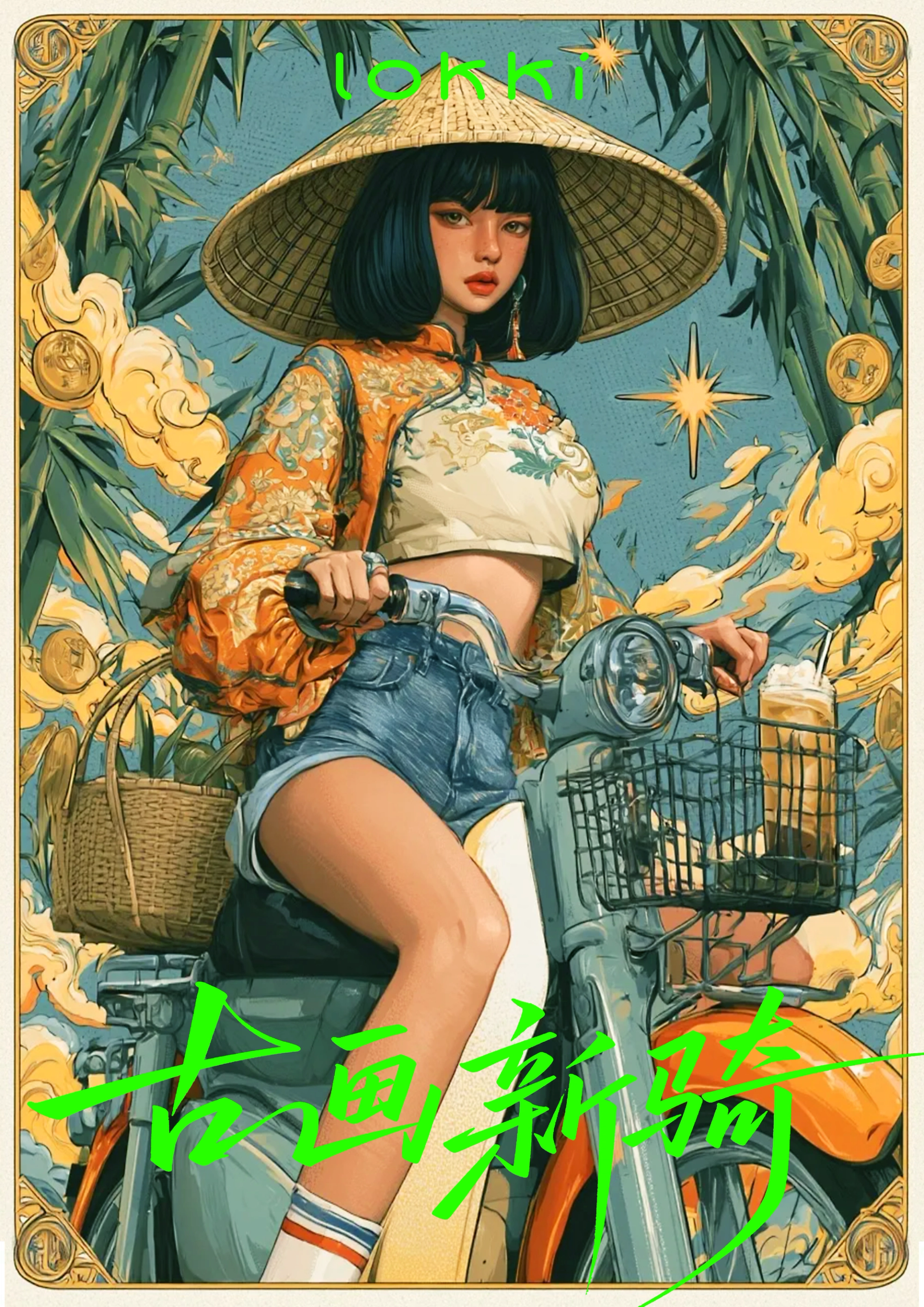
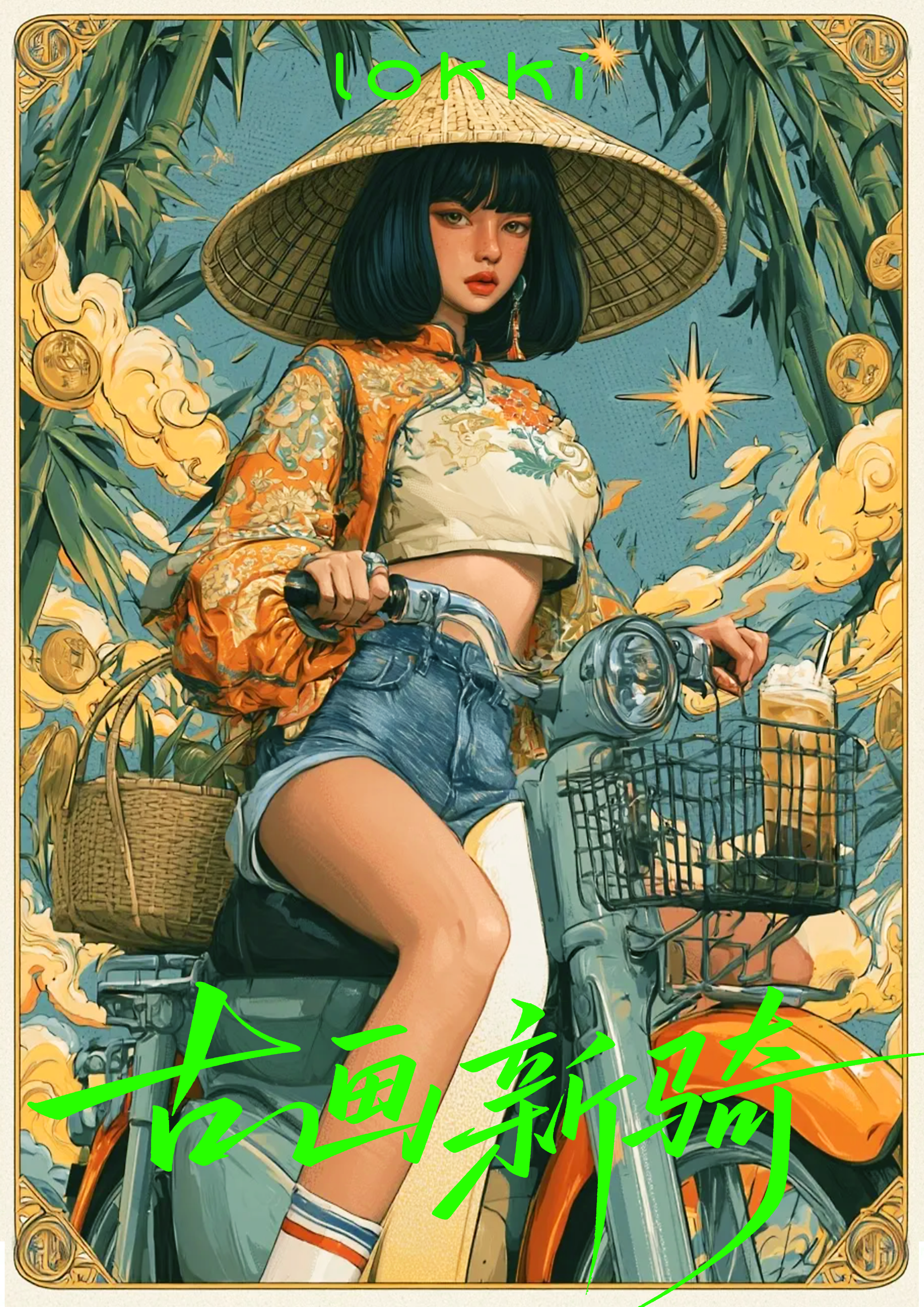
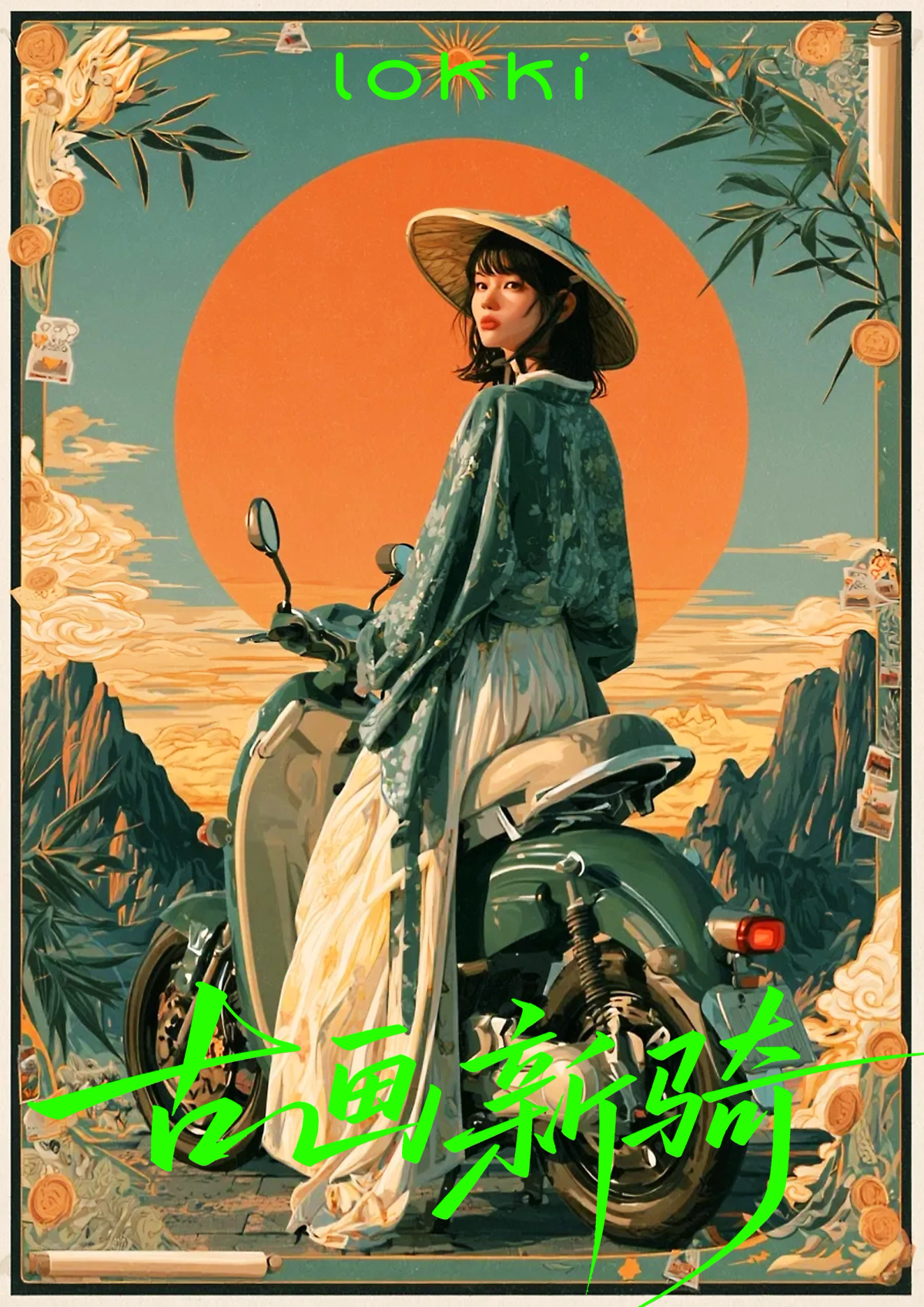
Look at the bottom of the first poster in this series. The calligraphy — 古画新骑, four characters in a green so bright it almost hums — runs straight across the scooter's front wheel. It doesn't sit politely underneath the image. It walks in front of it.
That overlap is the argument the whole series is making. A classical Chinese painting doesn't have to stay behind glass. It can be loud, contemporary, and a little rude to its own frame.
The frame does the heavy lifting
All four posters are built the same way: an inner picture, a hairline gold rule, then a decorative border with coin roundels and ruyi cloud corners, the way a hanging scroll is mounted in silk. We drew that border separately for each image instead of reusing one master file, because the bamboo and the clouds needed to overlap it in different places.
It sounds like a small thing. It's the difference between a picture with a border and a picture that knows it has one.
Three greens, and one argument
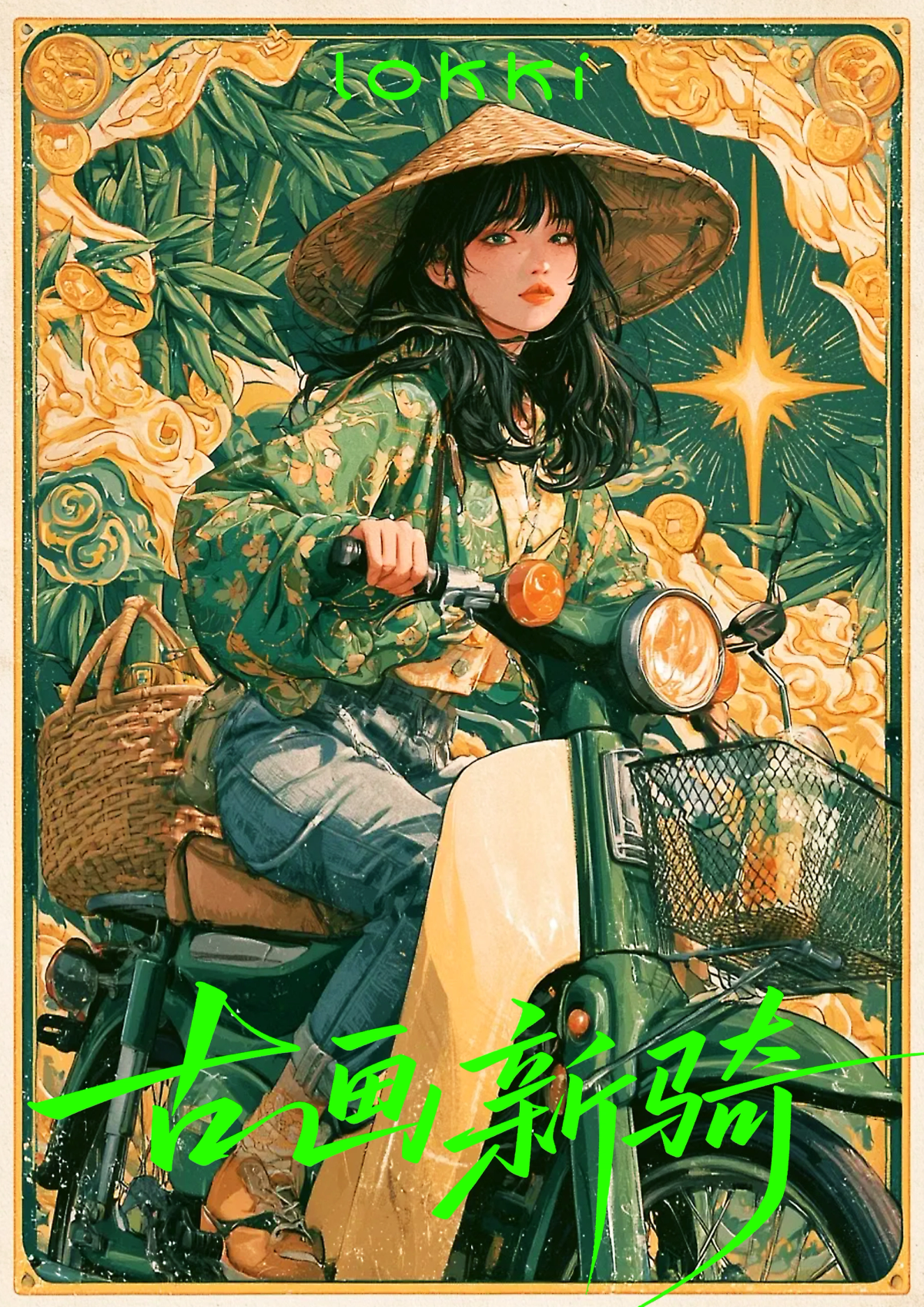
Chinese painting green was never a single colour. 石绿 is mineral, opaque, almost chalky. 竹青 is cooler and thinner, closer to shadow than to pigment. We used both, then put a third green into the calligraphy — a synthetic, nearly fluorescent one that belongs to a screen rather than a scroll.
A painter friend told us the neon green was wrong. He was right. That's why it stayed.
The calligraphy isn’t a logo. It’s the one element in the picture that refuses to believe in the frame.
A scooter is not a horse
The obvious move was a horse. Rider, beast, landscape — the composition everyone already knows by heart. We went with a vintage scooter instead, because it is small, domestic and slightly ridiculous, and because a world built for myth looks different when something ordinary walks into it.
Every mechanical detail stayed honest: the chrome mirror, the wire basket, the plastic cup with a straw. The joke only works if the object is real.
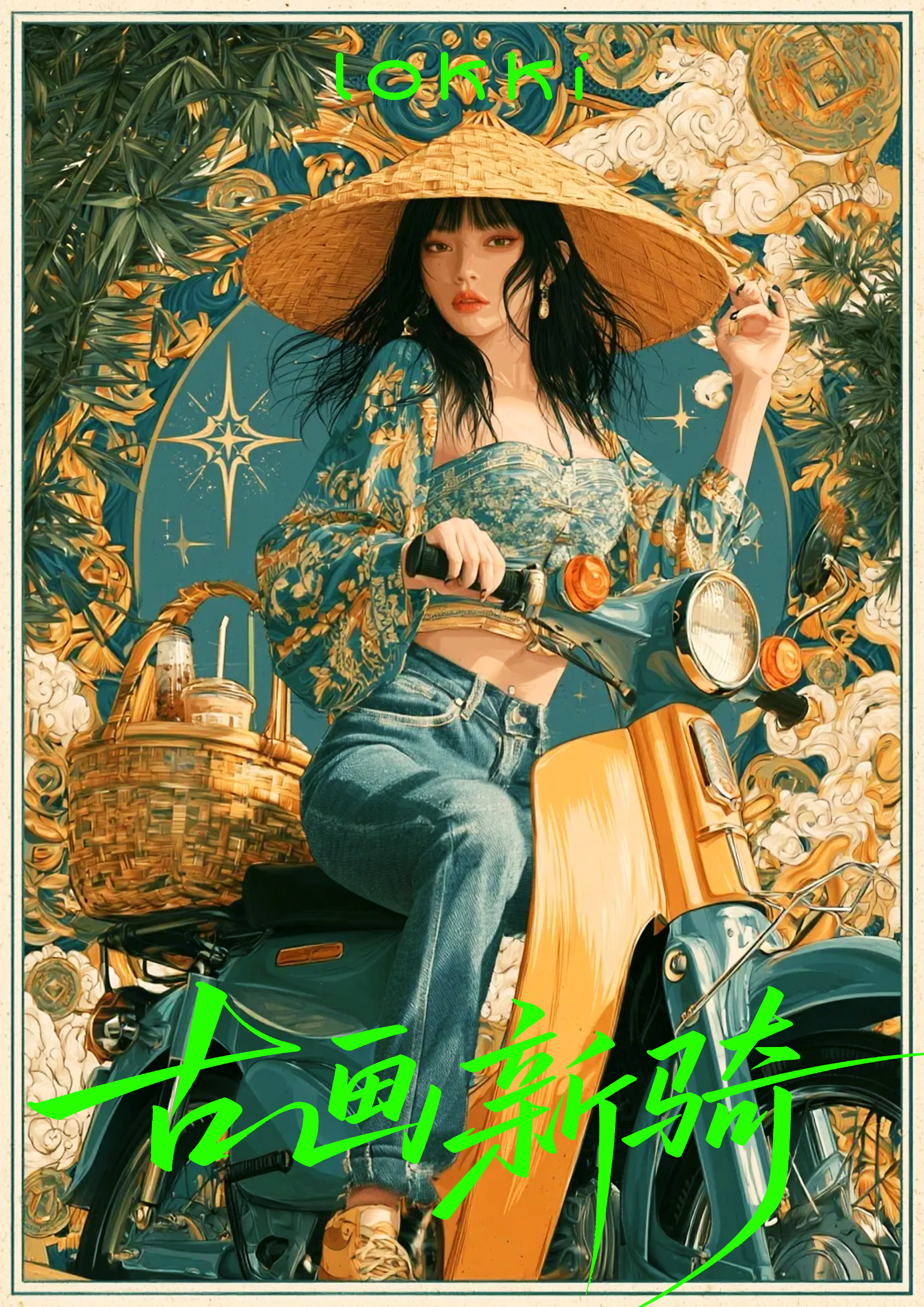
That cup, by the way, is the most modern object in the series. Nobody in a classical painting ever held one. It also does more storytelling than any prop we cut.
Four panels, four hours
The set works because each poster changes the weather. Gold late afternoon. Deep bamboo shade. A blue hour that turns the machine teal. And a sunset so orange it flattens the mountains into silhouettes.
Same rider, same composition, different light. Put all four side by side and it reads like a day passing — which is the closest a still image gets to time.
What we took out
The first pass had a second figure, a paper umbrella and a lantern. All three were beautiful and all three were noise. Cutting them made the rider look less like a model and more like someone who happened to be passing through.
We kept the drink. The drink is the joke, and the joke is the point.
On the tools
These are AI-assisted illustrations, art-directed and retouched by hand. Composition, palette, type and final grading are ours; the rendering is a collaboration with a model that has no idea what a scooter is until you describe one precisely. Writing the description turned out to be the most painterly part of the job.
The full set lives on the Ancient Ride Reborn case page, alongside the other five series in AI Lab. New sets go up there first.