design
Objects Narrate the Years: When a Rain Cape Becomes a Cliff
Four old objects, one very small person, and a museum case that made a straw cape look like a cliff. Notes on scale, gold ink, and two posters that never quite worked.
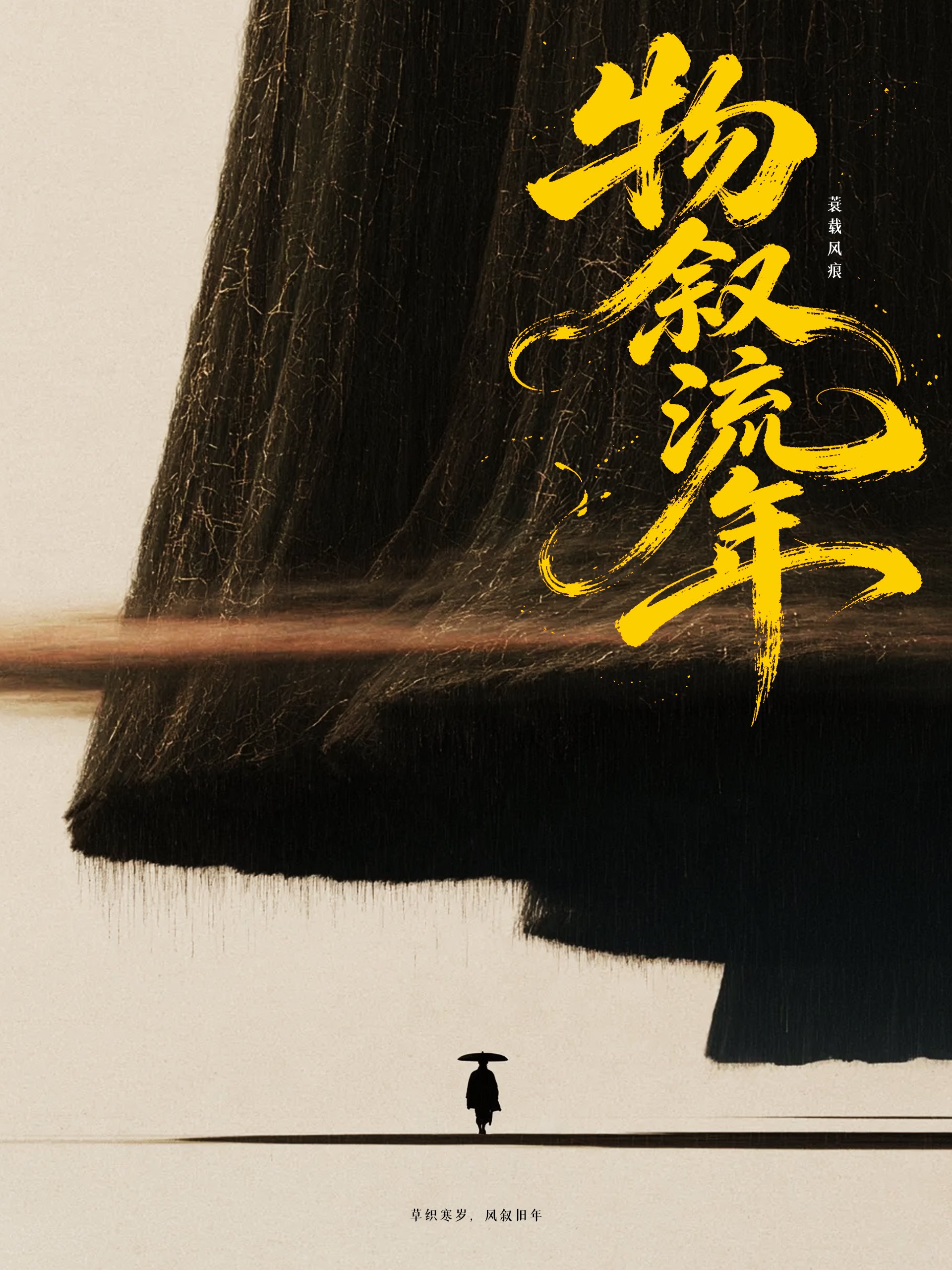
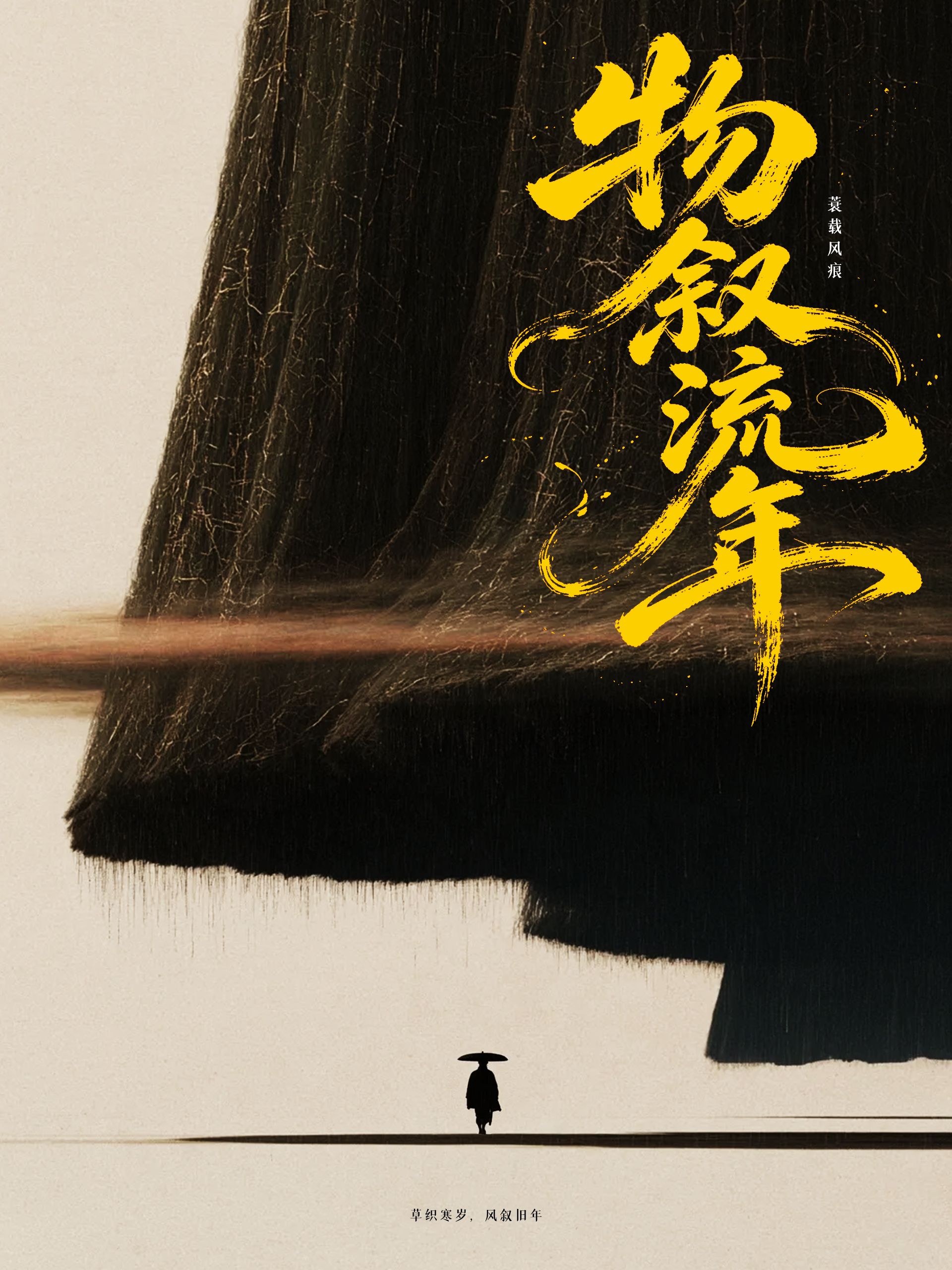
The straw rain cape is the reason this series exists. I saw one in a county museum, in a case that was too small for it, and my first thought was not “what a beautiful object”. It was: that thing looks like a cliff.
It is not a cliff. It is grass, woven and stitched, with a fringe at the bottom where the strands were cut. But under a low light, with the fringe spilling over the edge of the shelf, it read as rock. Keeping that misreading alive on paper took two weeks.
Accurate first, monumental second
We set one rule before drawing anything: the object has to still be itself. If the cape stopped reading as a cape — if the fringe turned into a waterfall — the picture would slide into fantasy, and the only interesting thing about it, an ordinary object at the wrong scale, would be gone.
This is harder than it sounds. Seen from the rim, an iron wok is just a dark curve. You have to keep the soot, the two handles, the scratches, or it turns into a hill.
Scale is a relationship, not a size
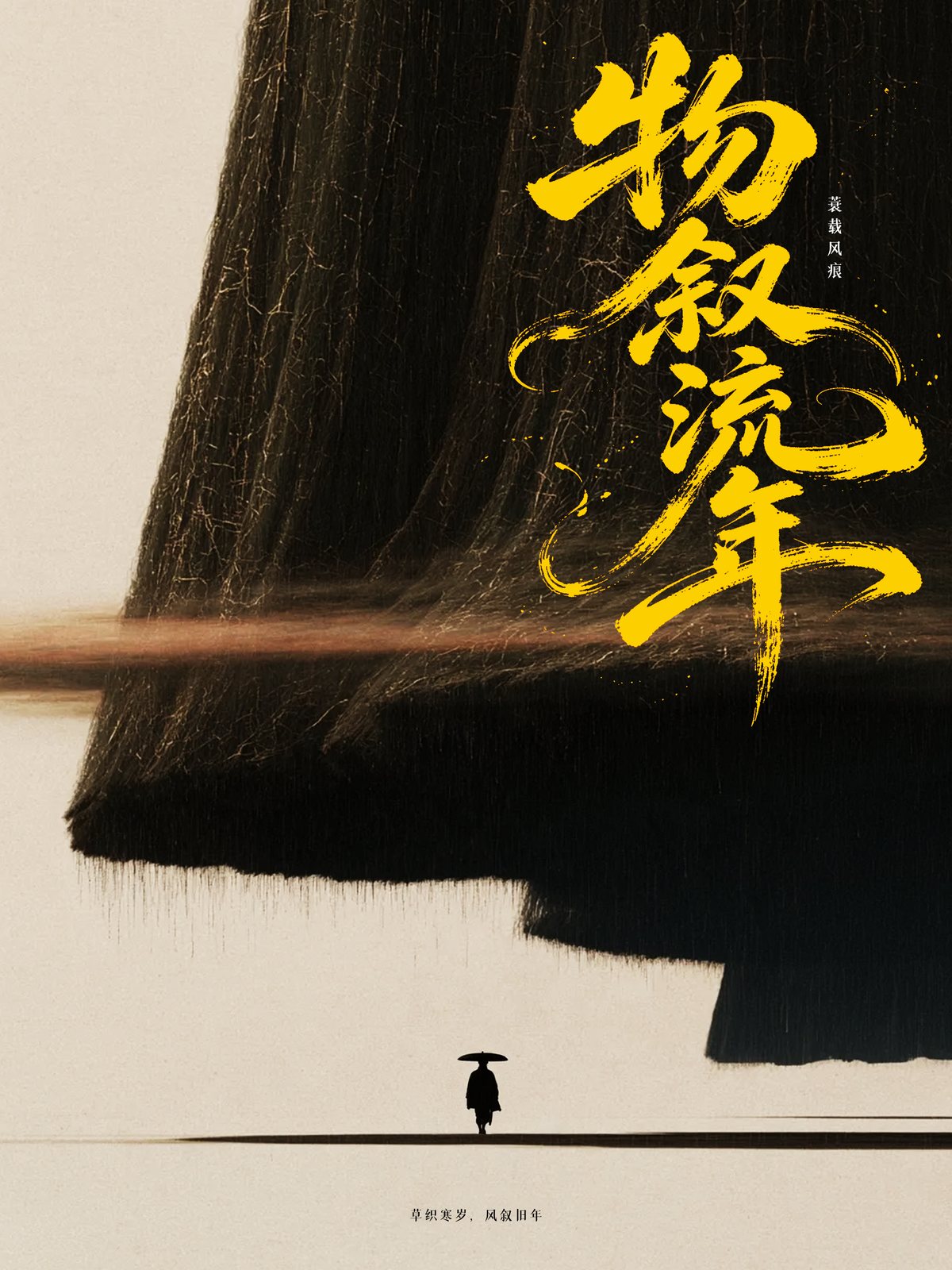
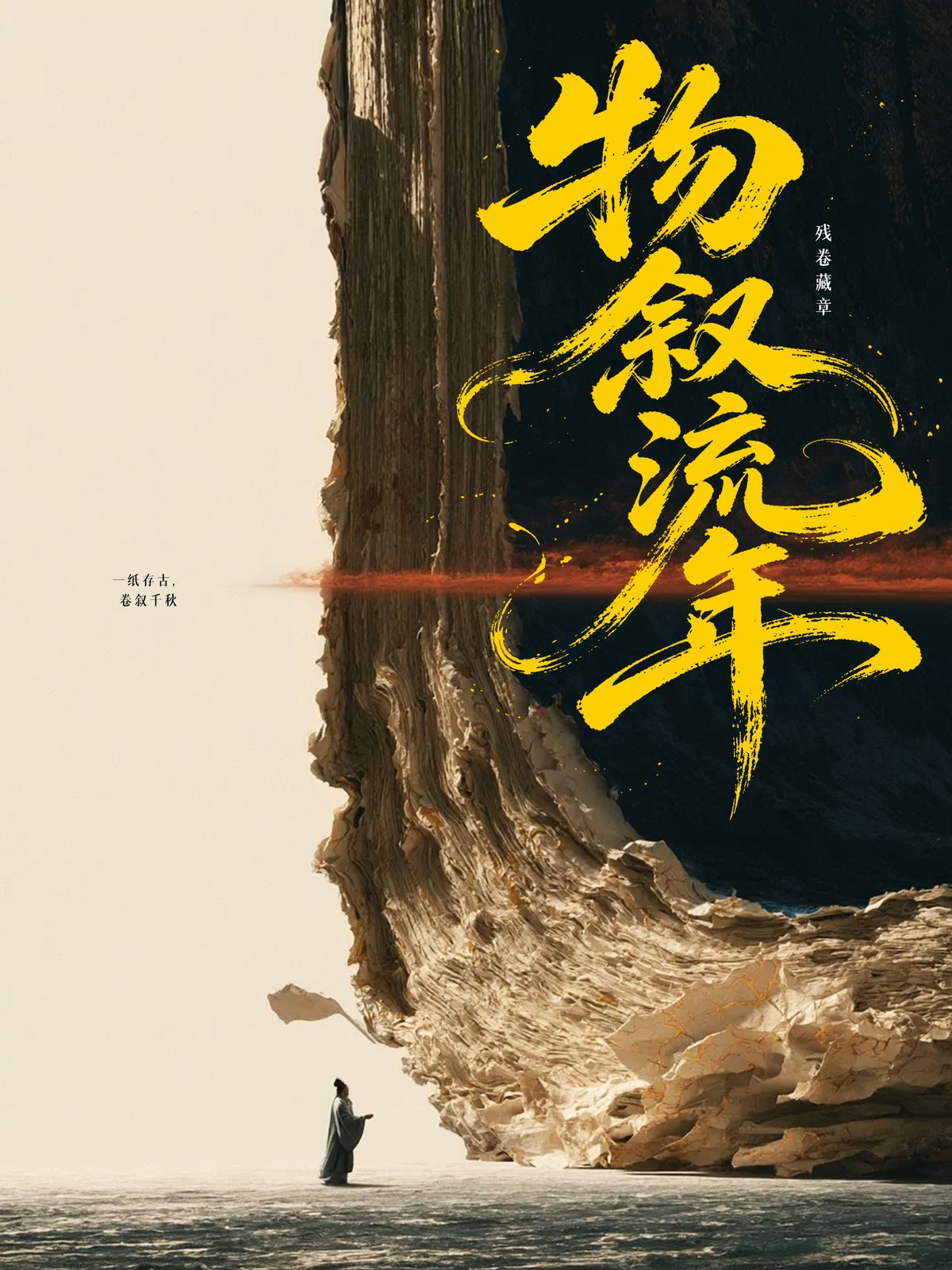
The figure is one fortieth of the object’s height. At one twentieth the poster became a fairy tale. At one eightieth the person disappeared and left an abstract shape with a nice texture.
One fortieth is the point where you can still see the umbrella. Everything else is held down: horizon in the bottom eighth, one hairline, no clouds, no birds, no second figure. A poster is mostly the things you refuse to add.
An object only becomes giant when somebody stands next to it, doubting it.
Why the type is gold
物叙流年 runs vertically for about a third of the sheet in a wet brush script, the kind where the brush runs out of ink at the end of a stroke. Gold was a practical choice before it was a tasteful one: the paper is bone white, the objects are near black, and gold is the only warm colour that holds on both.
Red was the first attempt. It brought a New Year feeling with it — too much occasion for an object that is just old. Gold sat lower. It is closer to old lacquer, or to the inside of a brass lock.
Two of the four do not work
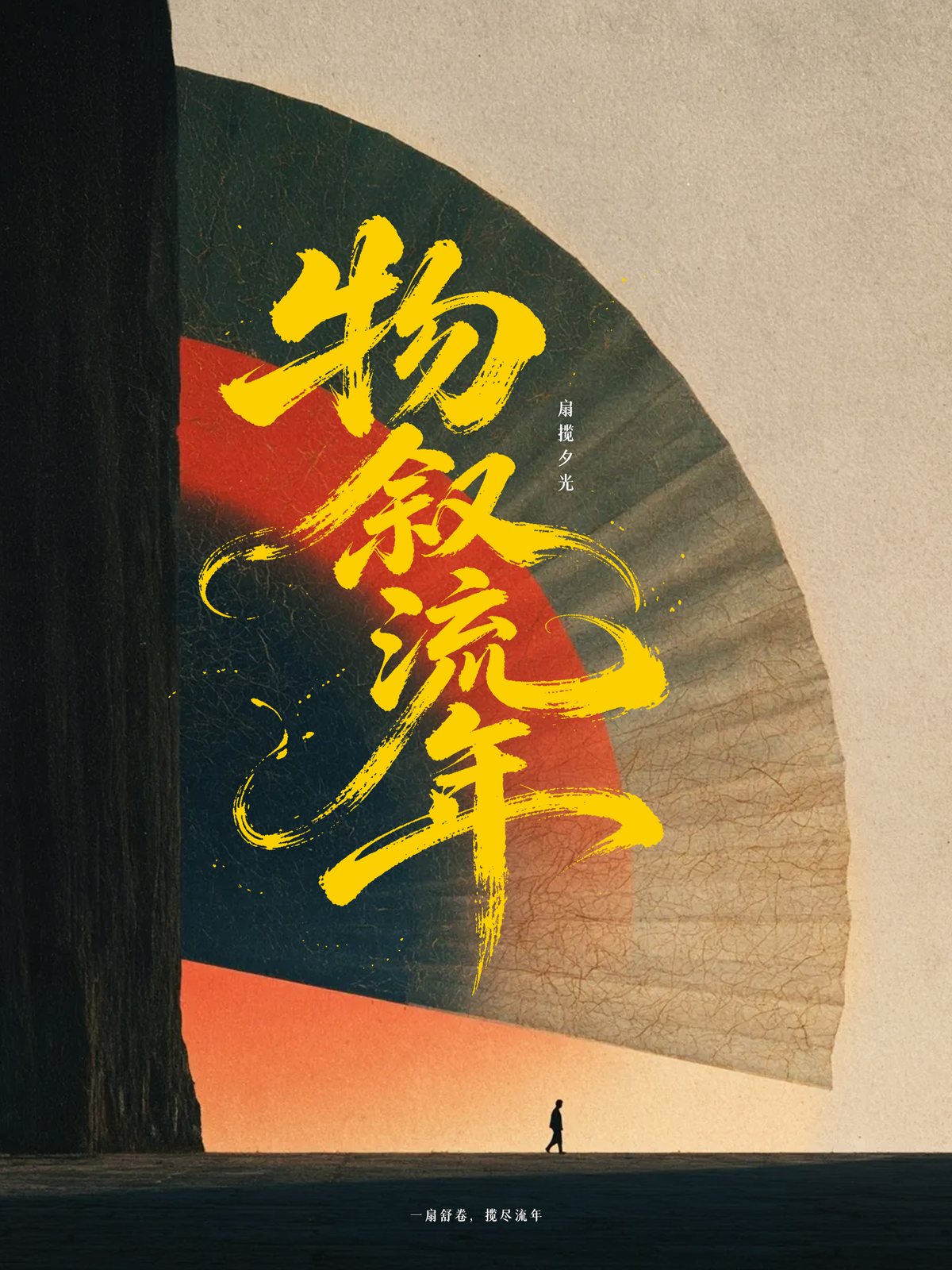
The fan is the weakest of the set. A folding fan opened flat is basically a circle, and a circle at that scale stops being a fan and becomes a sun. The ribs are there. You just read the silhouette first, and the silhouette is not saying much.
The scroll works better because it has an edge. Standing it up like a cliff gave the figure something to walk toward, and the blur at the bottom, where the paper frays, did the rest of the work.
Three weeks later we did it again
The set was finished, published, and it kept bothering us. The objects had become silhouettes, and material does not survive a silhouette. The grass, the porcelain, the woven bamboo — none of it was in the picture any more.
So in October we rebuilt the same idea in colour, and that version explains itself better than I can here: Objects Recount the Years, in red.
All four posters from this first set are on the Objects Narrate the Years case page, and the rest of the series sits in the archive.