design
Ramadan Gift Box Packaging: Seven Drawers, One Production Die
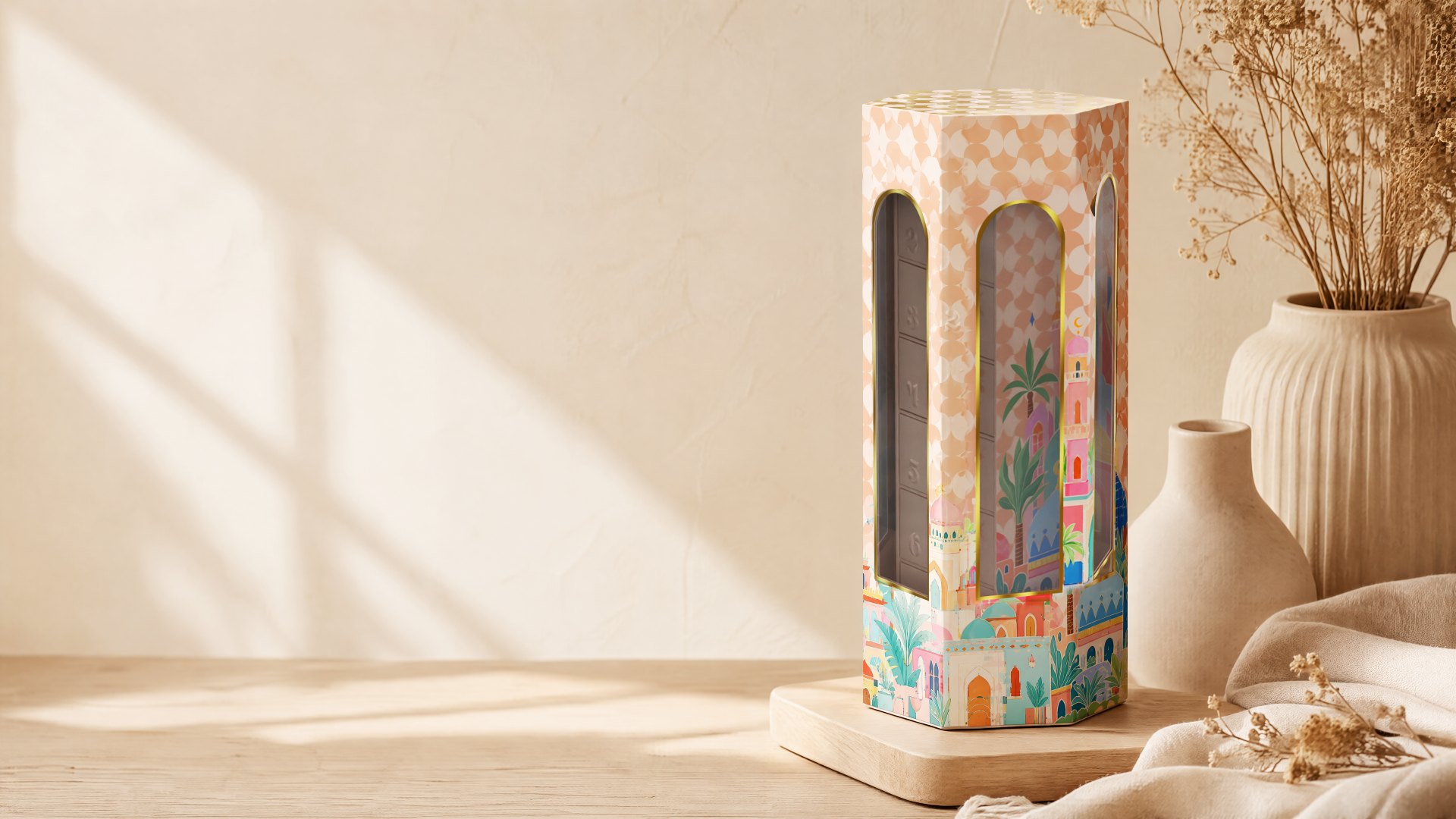
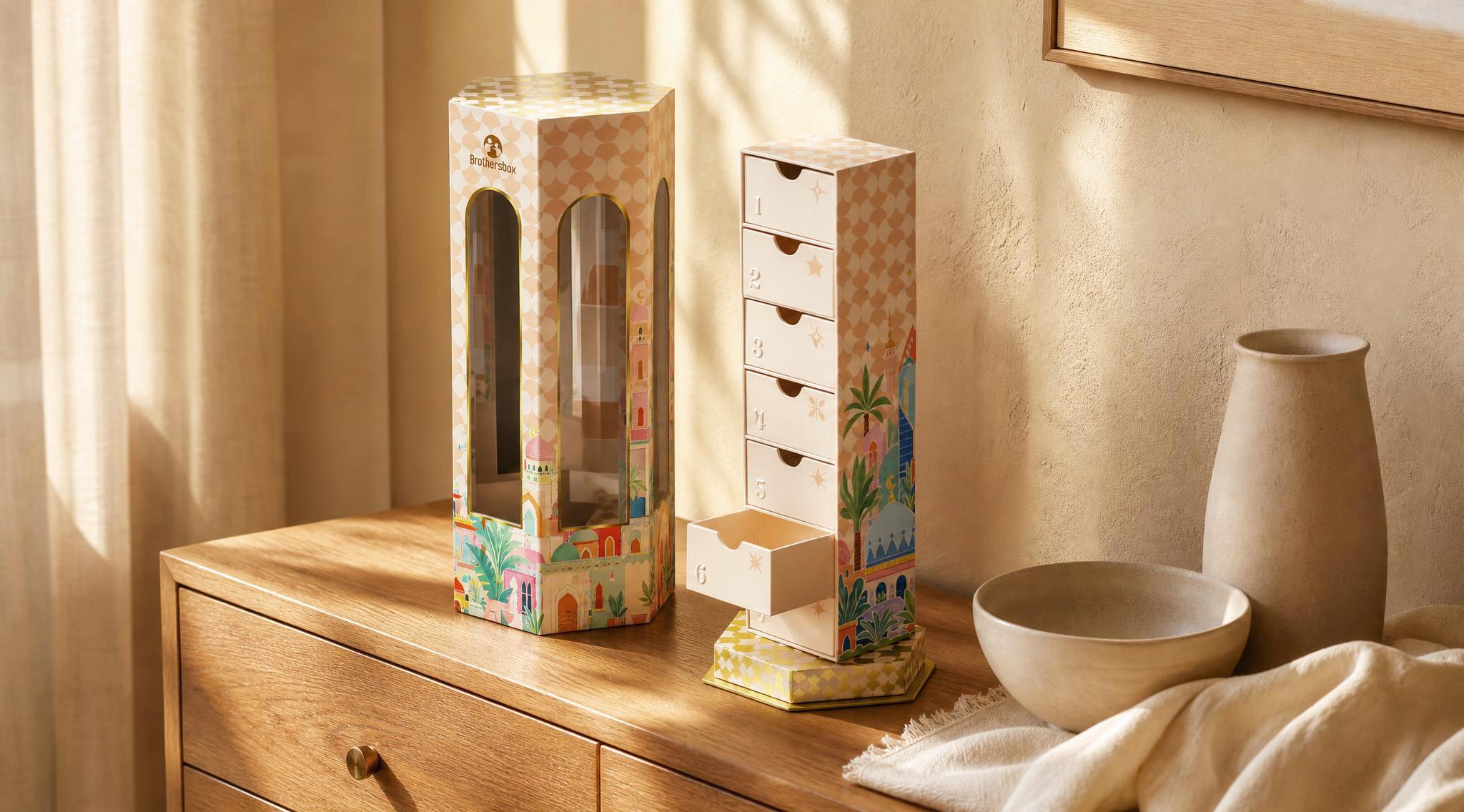
A hexagonal sleeve, an arched window and seven numbered drawers. How a Ramadan countdown box was built to survive a shelf, a courier and seven openings — without seven sets of tooling.
A countdown box is a strange product. It is bought before the season, opened during it, and judged after it. In between, it has to sit on a shelf and explain itself to someone walking past at two metres.
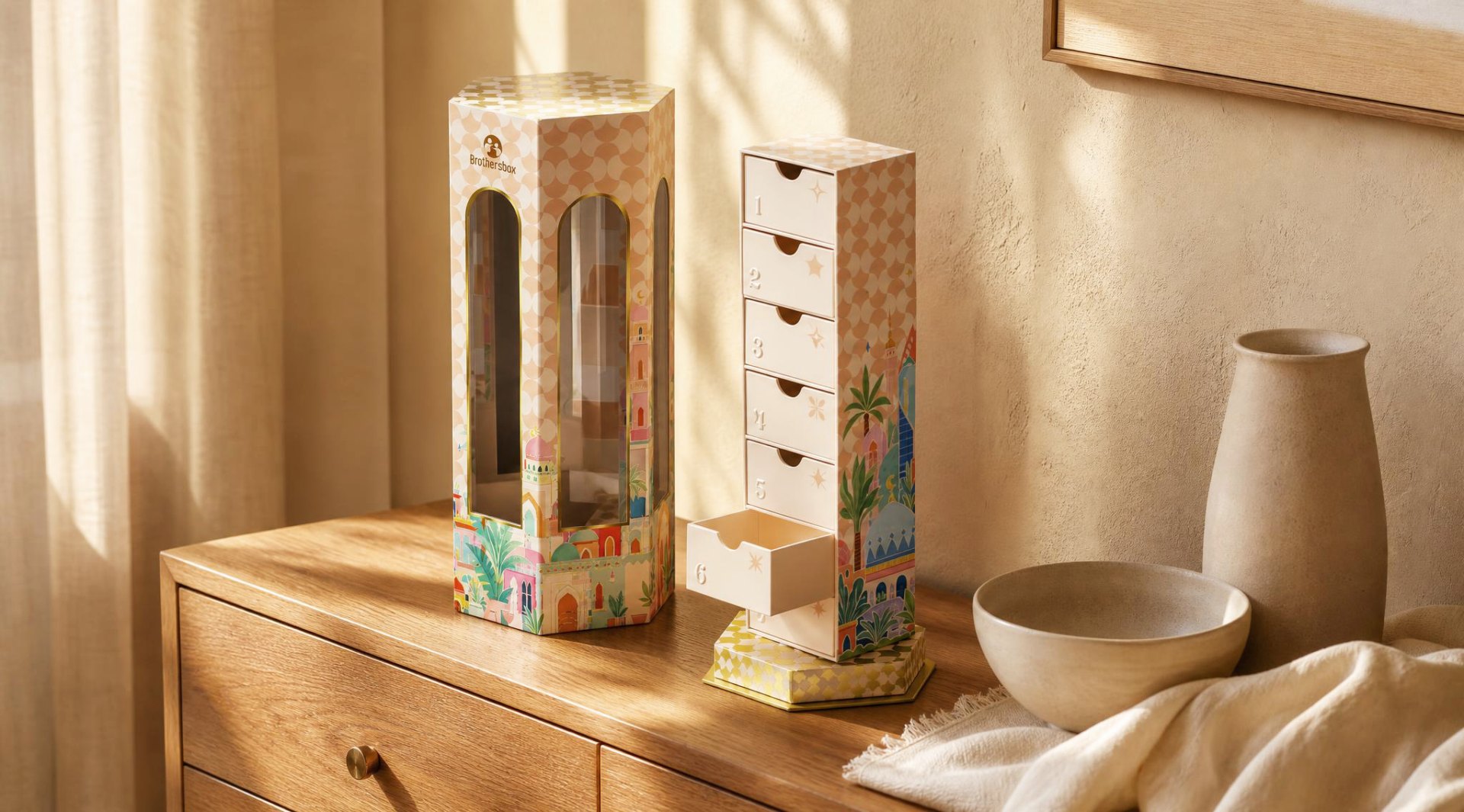
This Ramadan box had to do all of that in seven nights. Seven numbered drawers, one for each of the last evenings before Eid — which means the object is handled seven times and looked at for six weeks.
The brief nobody writes down
The written brief asked for a premium Ramadan gift box for the Middle East. The unwritten one was harder: it had to be stockable. That single word rules out most of what makes festival packaging interesting — tall structures, irregular footprints, anything that needs a salesperson to explain it.
So we fixed two numbers before drawing anything. The assembled box had to fit under a 380mm shelf. And it had to survive a 1.2 metre drop in its shipper without a single drawer sliding open.
How not to say "Middle East"
The first moodboard was the problem. Domes, lanterns, camels, arches in silhouette — every shorthand that makes a project legible in a pitch and invisible in a shop. It also flattens a region into a postcard.
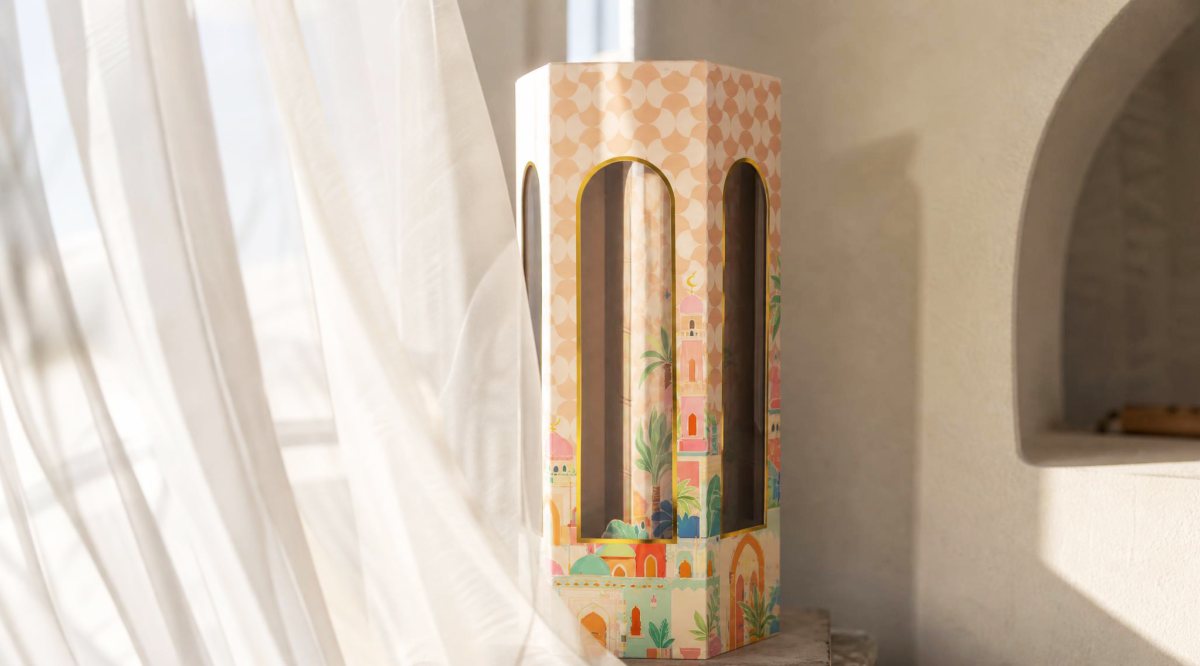
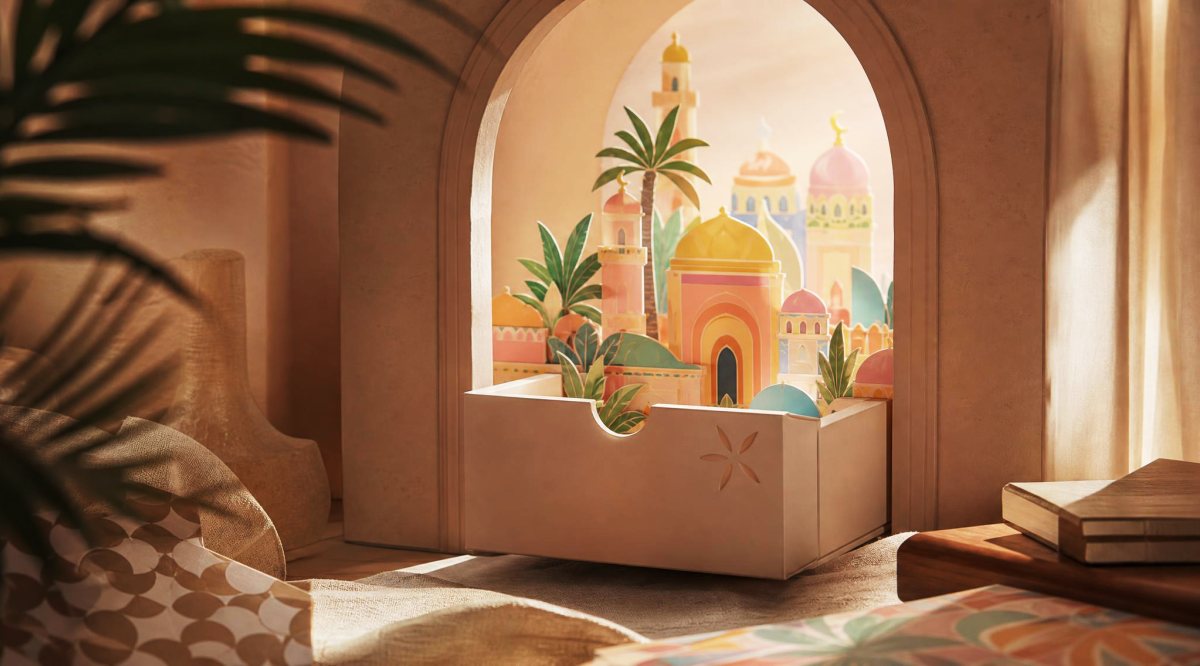
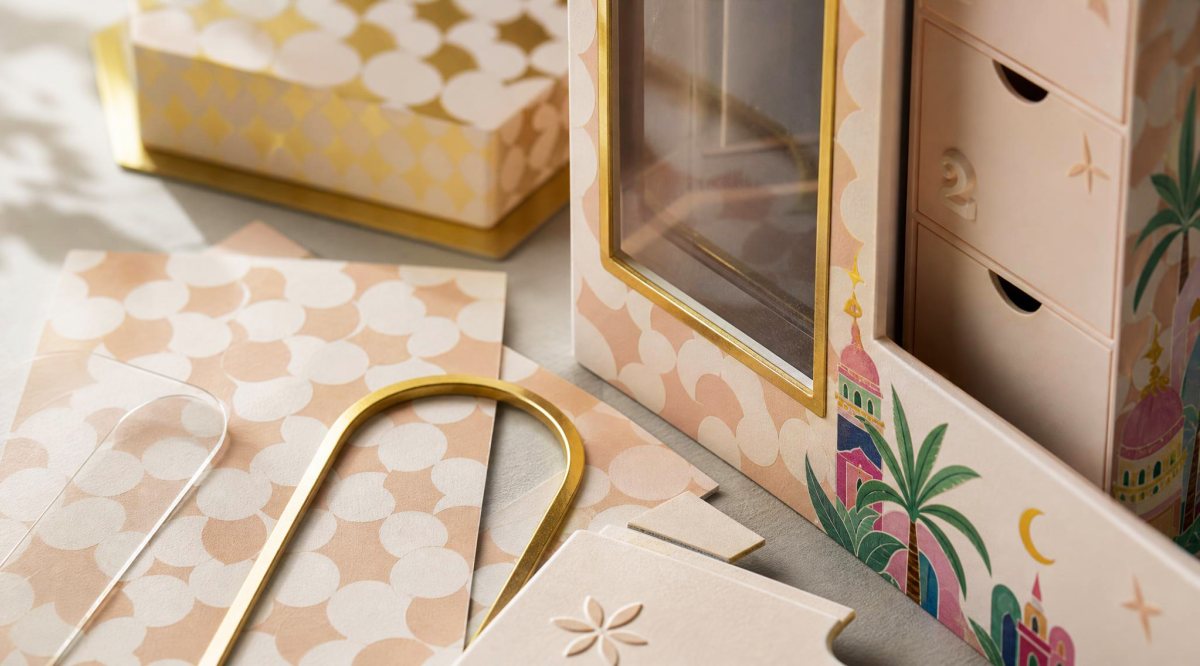
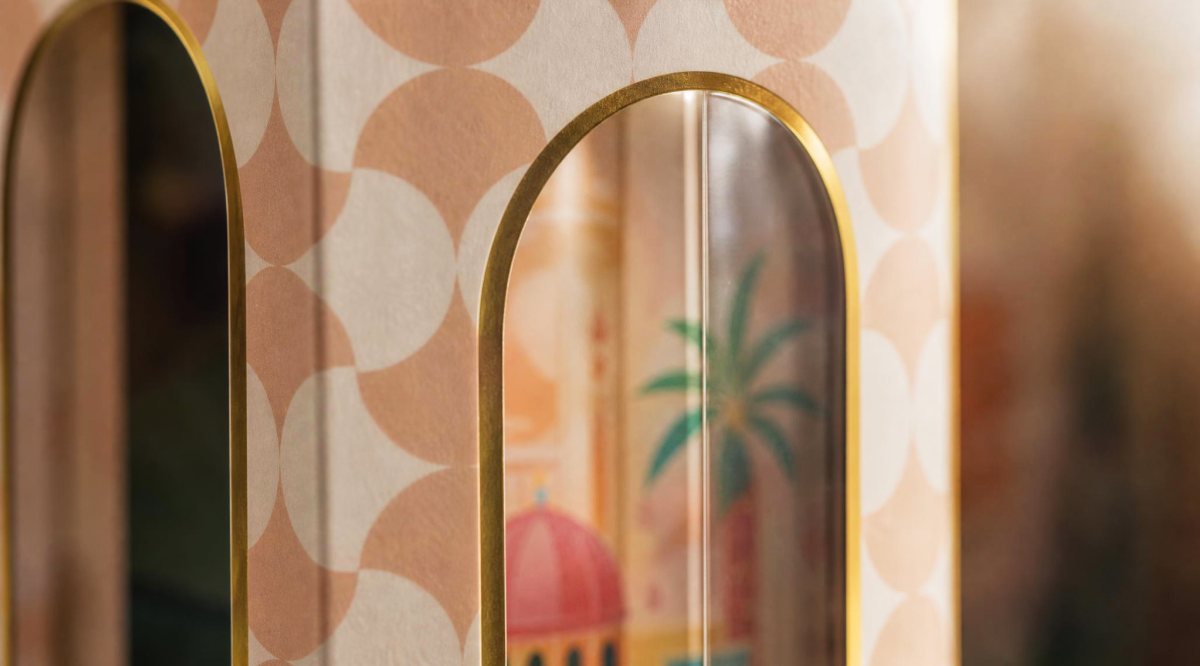
What we kept was architecture rather than iconography. A city drawn flat in low-saturation pastels: stepped rooftops, water tanks, a minaret at the edge of the frame, palms that read as shapes instead of symbols. The mosaic tradition became rhythm instead — a geometric ground pattern at fifteen per cent opacity, close enough to feel deliberate and quiet enough not to compete.

Seven drawers, one die
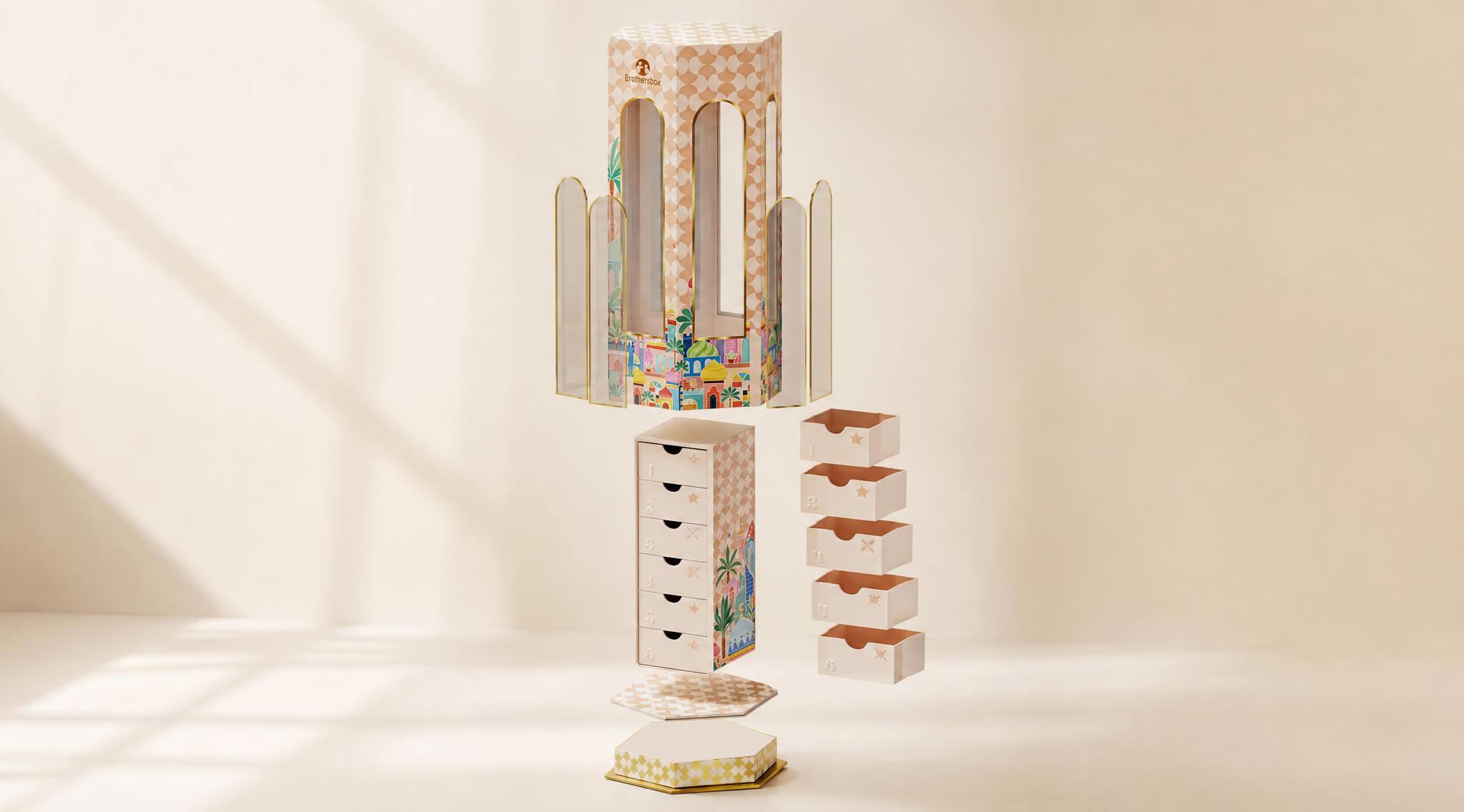
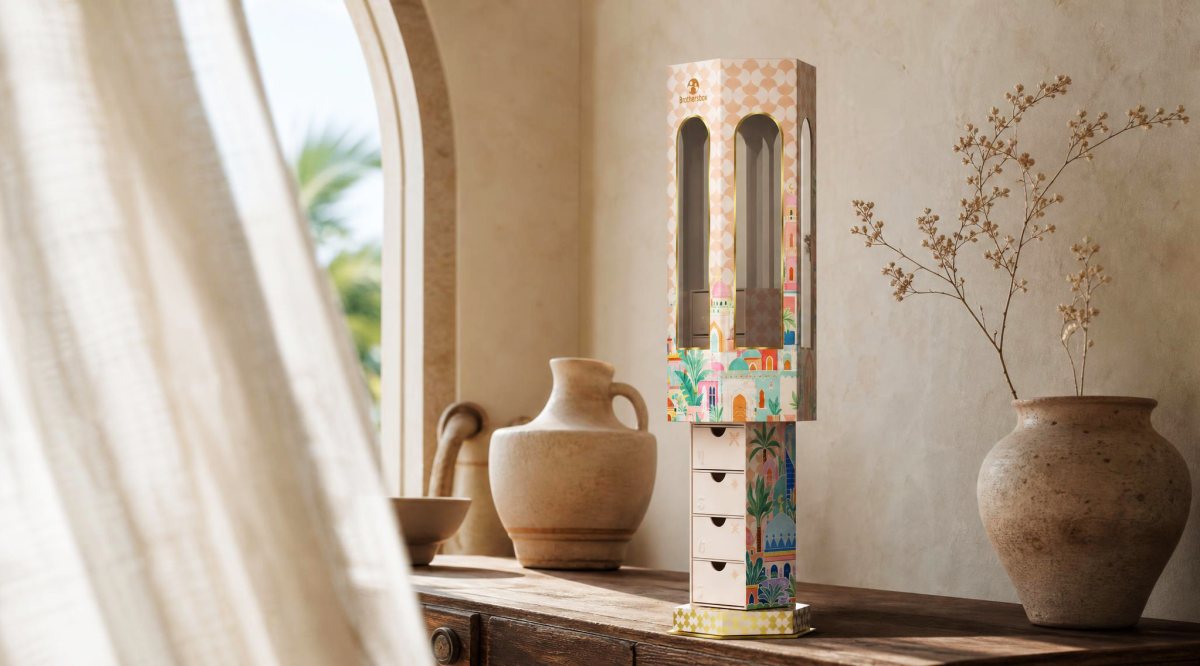
Structurally the box is a hexagonal sleeve with an arched window, wrapped around a tower of seven independent drawers.
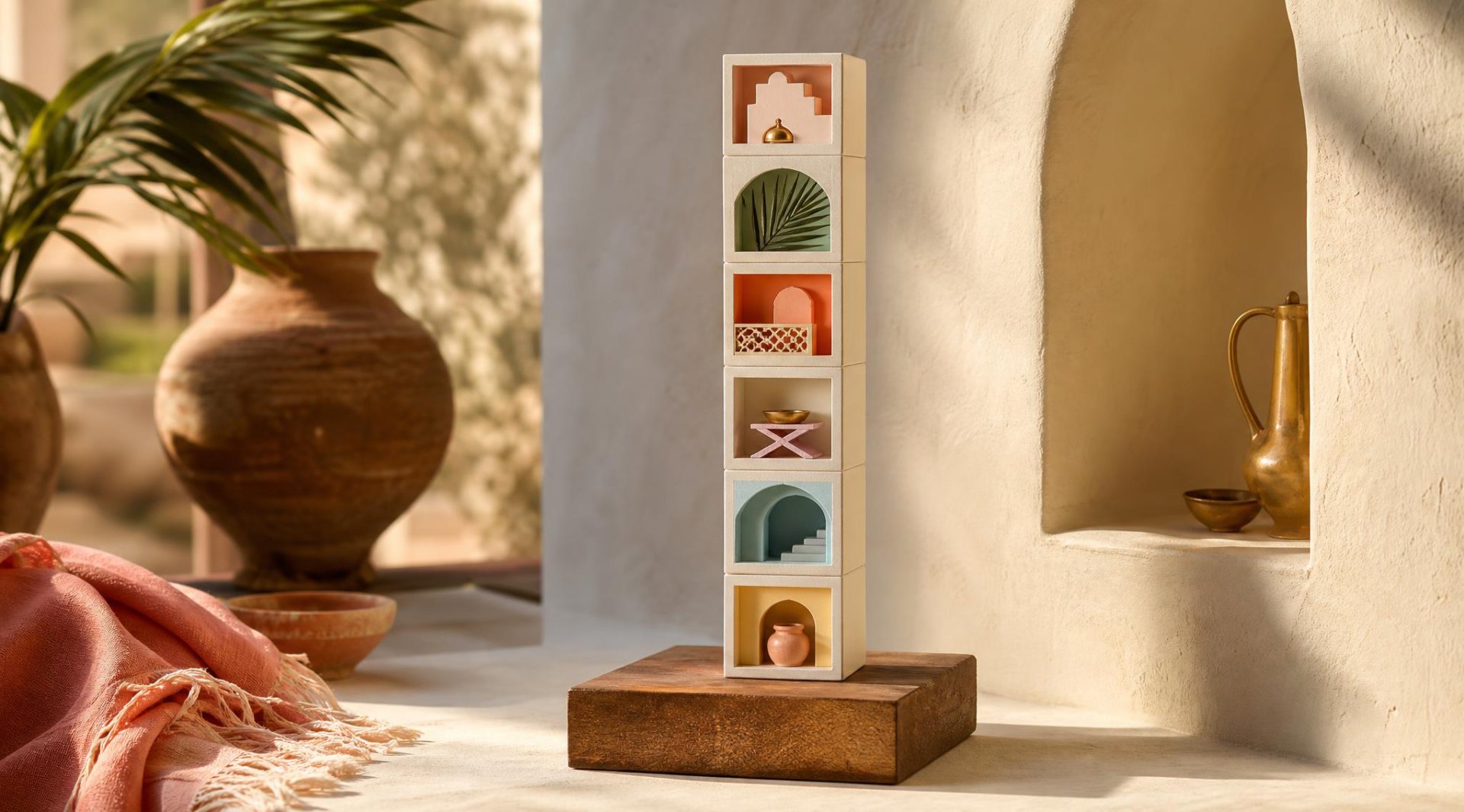
The naive version — seven different drawers — would have meant seven dies and a colour-matched assembly line. We built one drawer die and varied only the front window, so each drawer carries a different miniature scene cut from the same tool. The saving was not marginal. It was the difference between a project that could be quoted and one that could not.
The drawers hold by friction, not magnets. A magnet is a promise that a drawer will not open in transit, and it is also a unit cost that multiplies by seven. Instead the tray rails are sized at 0.3mm interference: enough to hold a full drawer through a drop test, loose enough to release at about four newtons of pull.
The window is the sales argument
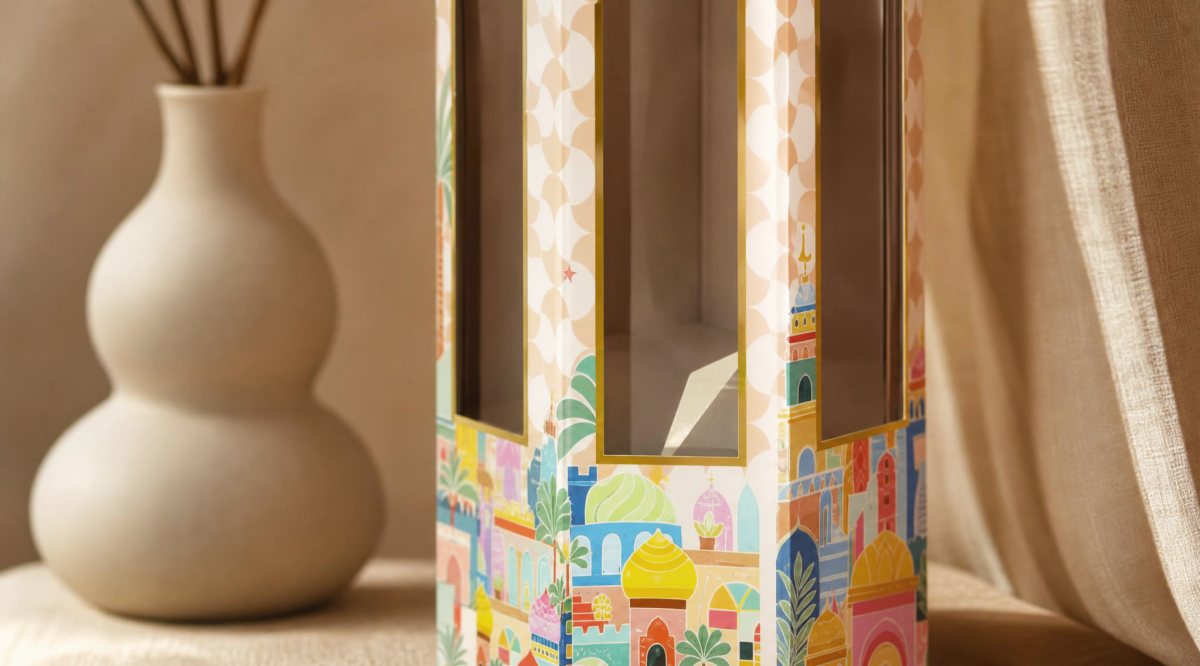
On a shelf nobody can open the box, so the arched cut-out in the sleeve is not decoration. It is the only thing that communicates the countdown before purchase. It had to reveal three drawers without giving away all seven, and it had to die-cut cleanly through 1.8mm board plus wrap — a combination that tears at the corners if the radius drops under six millimetres.
We tested four window heights in a real store aisle rather than a studio. The winning version sits at eye level for a standing adult and shows the third drawer open by about fifteen millimetres, which is just enough for a passer-by to understand that the thing comes apart.
Retail wants height and a face. E-commerce wants something that survives a courier and reads at 1,200 pixels wide.
Most projects solve that by making two products and compromising both. Here the tower is its own protection: the sleeve holds every drawer square, so the shipper only needs corner blocks, not a full inner fitment. It sits with the rest of our packaging work, and it shares its counting logic with a Christmas box built around twelve windows — which had the opposite problem, one month of waiting instead of seven nights.
A countdown box is used seven times and looked at for six weeks. The six weeks are the harder design problem.
What the factory changed
We specified 1.8mm greyboard for the tower and 350gsm for the sleeve. The factory proposed dropping the tower to 1.5mm to save weight, which would have let each drawer flex about a millimetre across a 200mm span — enough for the top drawer to bind by the third opening.
We kept the thickness and took the weight out elsewhere: perforated inner tray walls instead of solid ones, and a base redesigned as a single folded piece rather than two glued panels. The finished box is forty grams lighter than the first prototype and stiffer than the version we started with.
What the object is after the seventh night
The honest answer is that a countdown box has a short life. Seven openings, then it is a box again, and most of them go out with the wrapping paper.
We designed for the after-use anyway. The drawers are sized to hold jewellery, prayer beads, cards, the small things people keep. It is not a second product, but it is the reason the object might stay on a dresser instead of going into a bin.
If we did it again, we would test pull force with older hands much earlier. Four newtons is comfortable for us and slightly firm for a grandmother — and in this market, the grandmother is often the one opening the drawer.