design
Wander in Mountain Dreams: Six Scenes About Stillness
Mist, water, old trees, and a figure who is mostly there to give the scale. Notes from the quietest set in the AI Lab — and the hardest one to keep from turning into wallpaper.
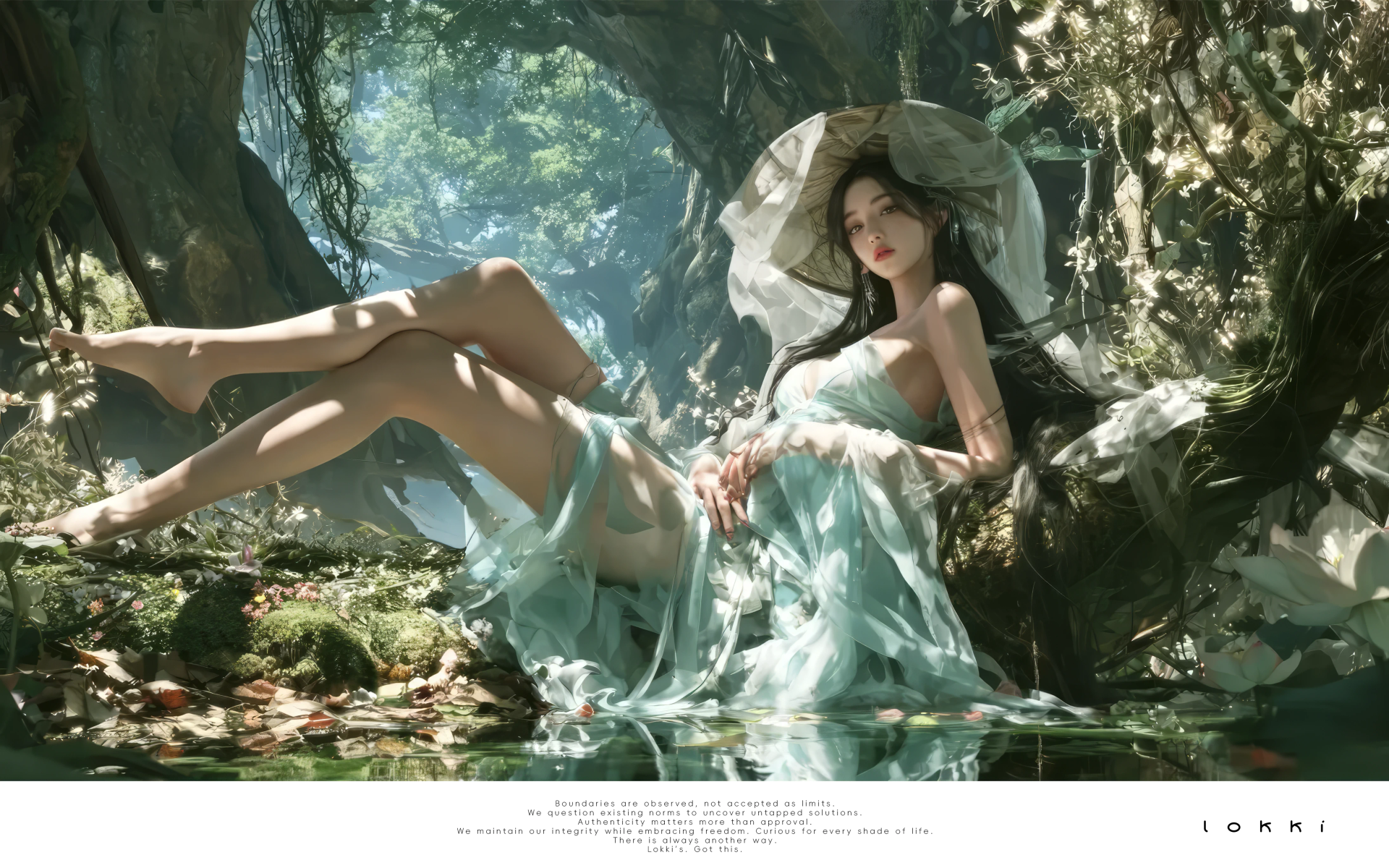
Six images, all in landscape format, all built around the same problem: how do you make a picture that feels quiet without making it empty?
The answer, in this set, was air. Not negative space as a design device — actual air, the kind that has moisture in it and moves slowly and makes a rock look soft at forty metres.
The figure is a ruler
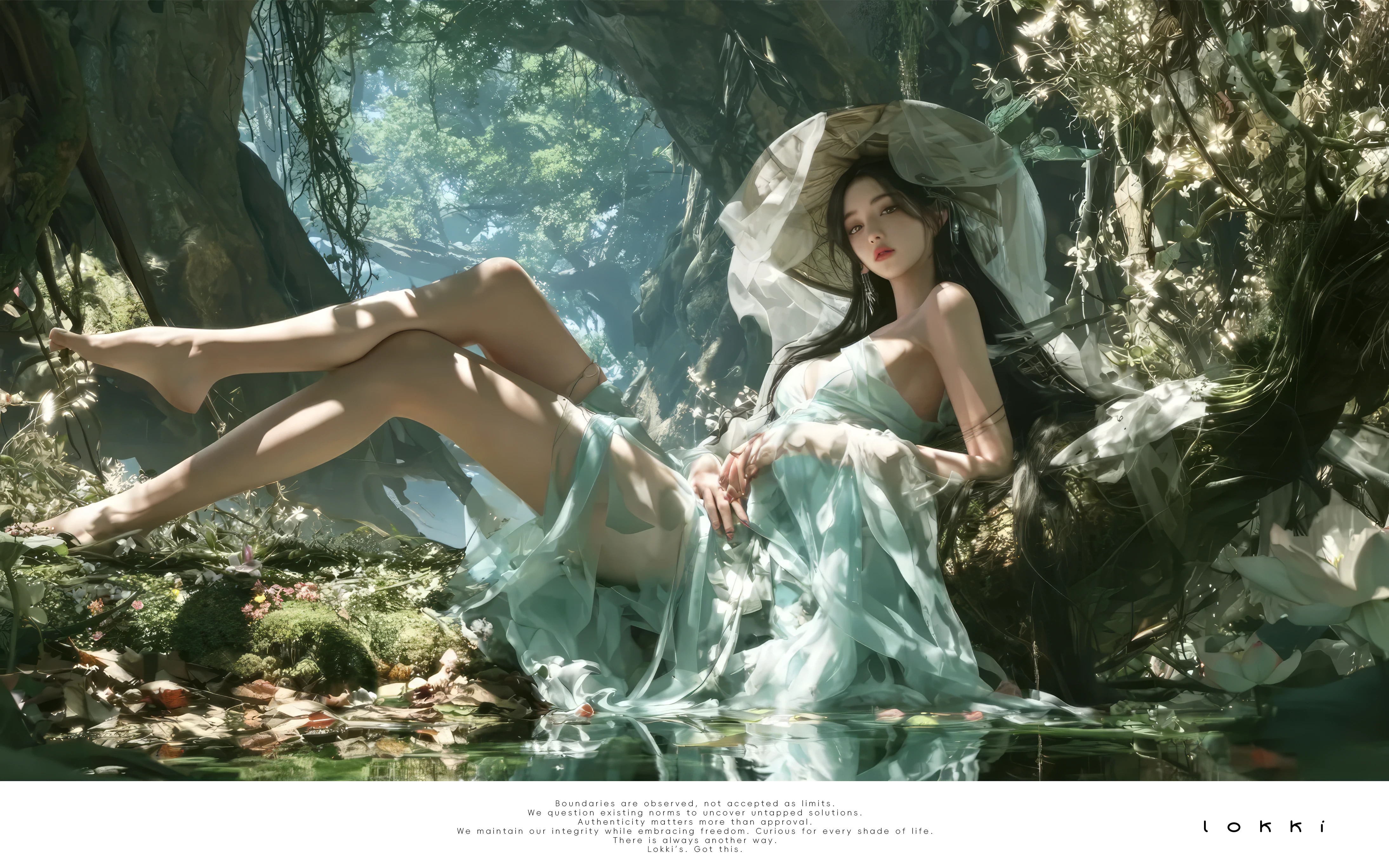
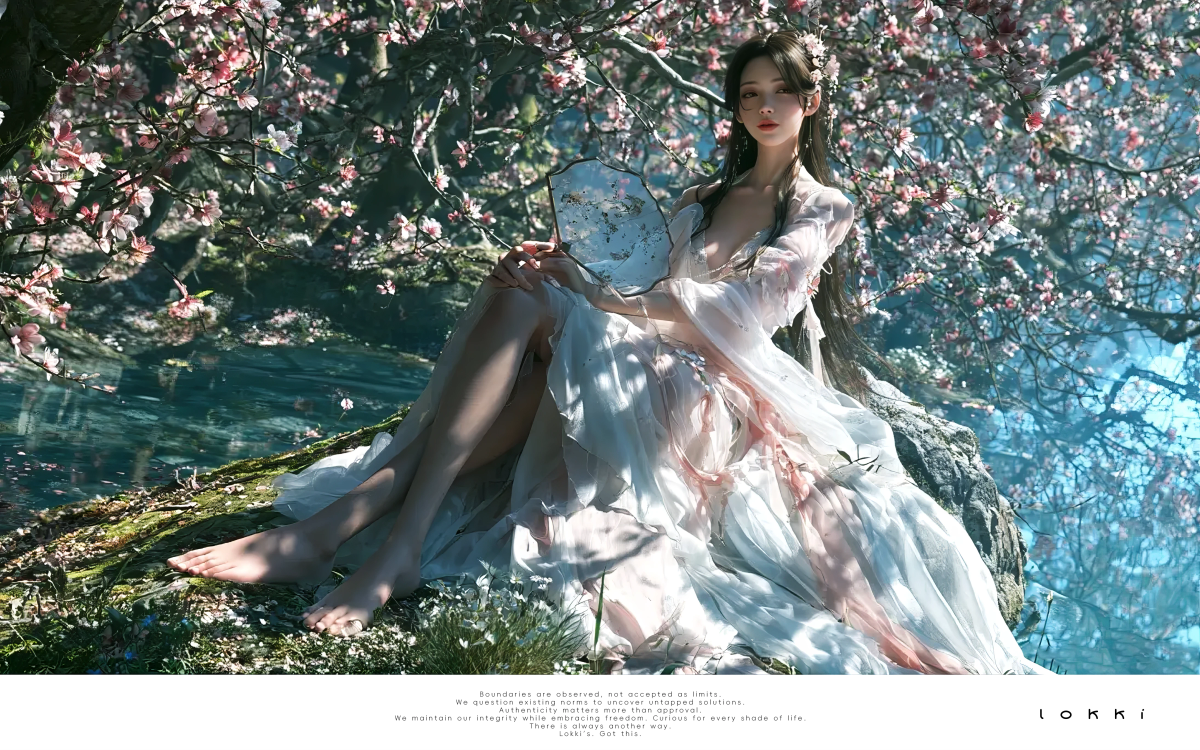
There's a person in most of these scenes, and she is almost never the subject. She's the thing that tells you how big the tree is, how deep the pool is, how far the mountain actually goes.
Scale is the whole trick. Without her, these are pretty landscapes. With her, they become places you could walk into and immediately be lost in.
Light before subject
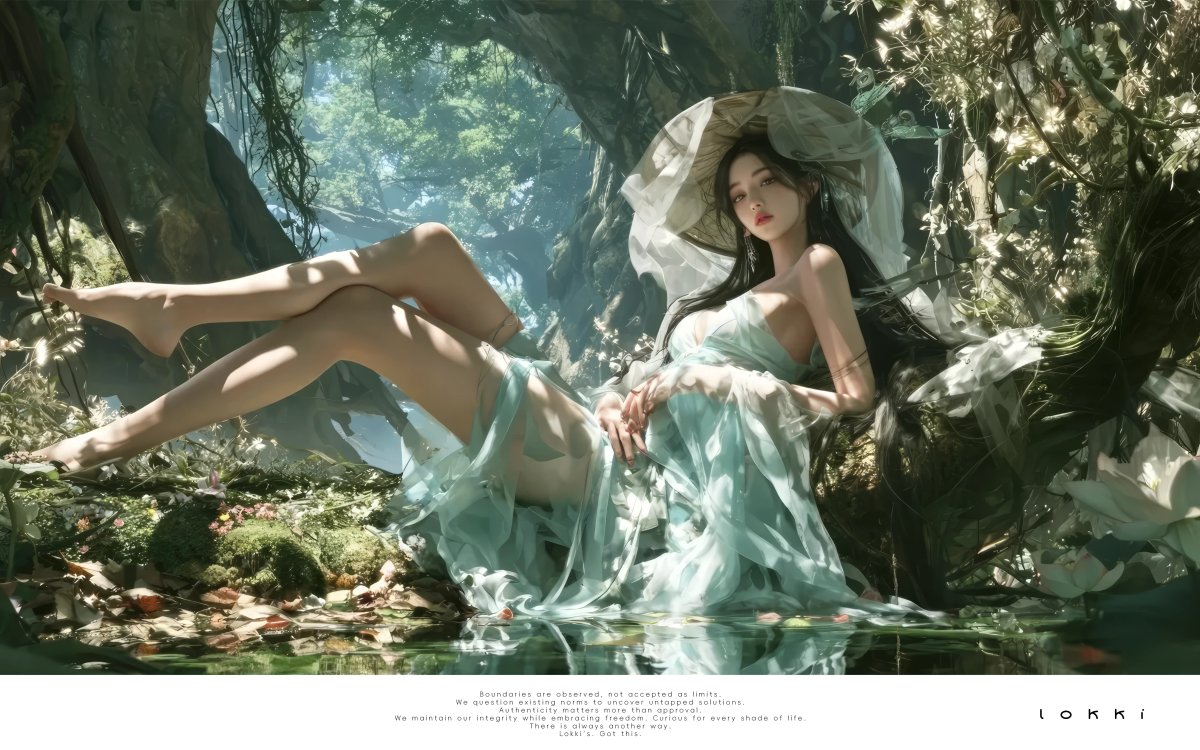
We built these scenes from the light backwards. Start with where the sun is, then decide what it hits, then decide what's standing there. If the light doesn't explain the space, no amount of detail will.
That's also why so much of each frame is haze. Mist isn't decoration in Chinese landscape painting — it's how you get depth without drawing every ridge. It lets the eye finish the picture.
The colours stay inside a narrow range on purpose: mineral blue-greens, moss, wet stone, a warm off-white for skin and silk. When everything is close in value, the one bright thing — a red cord, a gold pin — reads like a bell.
There's no dramatic event in any of these images. Somebody is sitting. Somebody is looking at water. That's the entire plot.
Landscape, not portrait
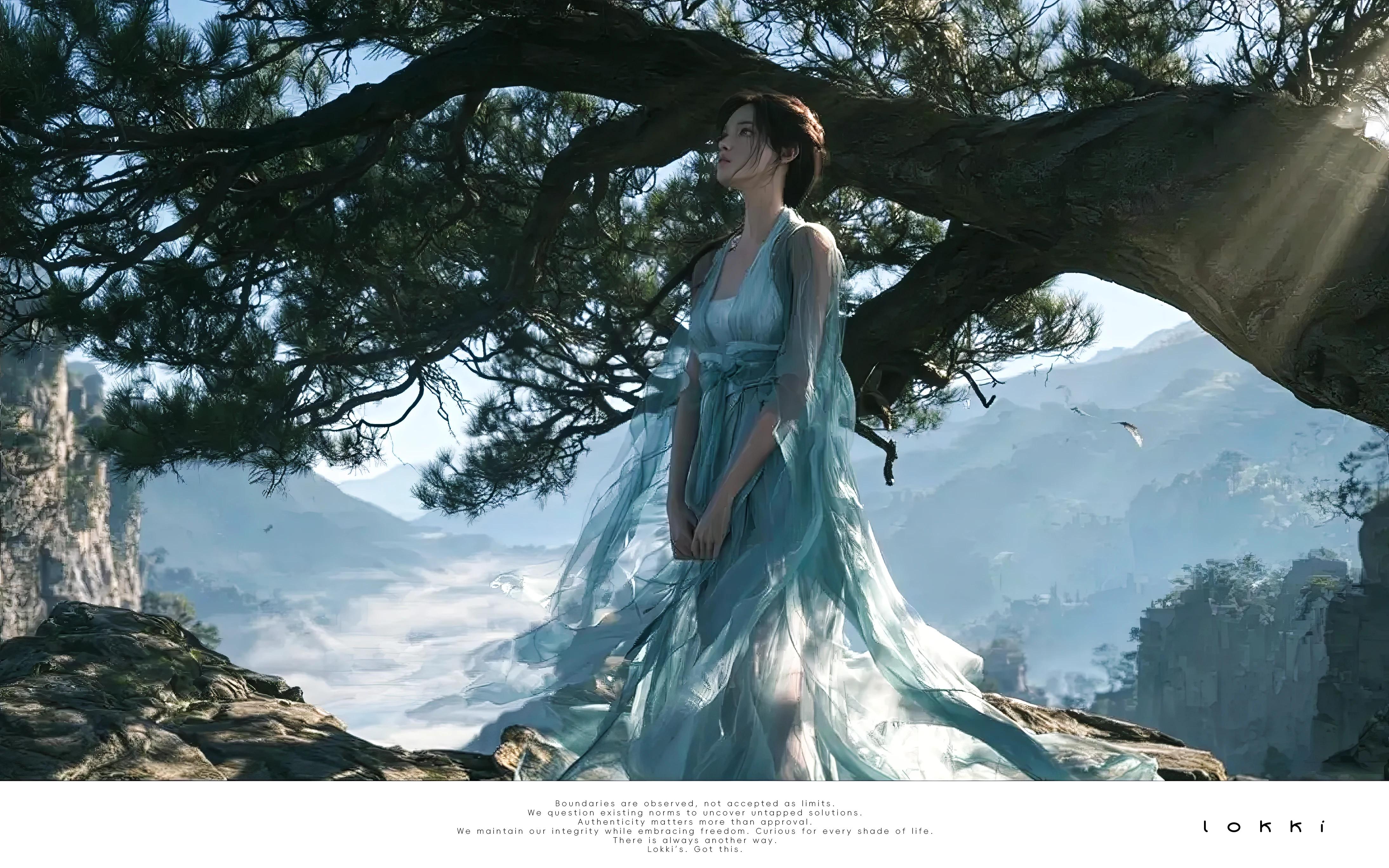
Every other series in the AI Lab is vertical. This one is 16:10, because the subject isn't a person — it's a distance. A portrait crop would have cut the air out of the picture and left only a costume.
Working wide also changes how you compose a figure. She can't fill the frame, so she has to be placed: off-centre, small, sometimes almost hidden behind a branch. The composition becomes about where she isn't.
Keeping it out of screensaver territory
The risk with this kind of image is that it becomes wallpaper: beautiful, weightless, gone. What pulls it back is specificity. A particular moss. A torn edge on the silk. A fan with a painting on it that you can almost read.
So we spent the detail budget on the small things and let the big shapes stay simple. Mist can be vague. The embroidery on a sleeve cannot.
Stillness is not the absence of detail. It’s detail that has stopped asking for attention.
The sound of the set
The files are named after weather, not after compositions: still afternoon, before rain, the hour when the cicadas stop. That's not whimsy. It's a way of keeping six images in the same emotional key when you're working on them weeks apart.
One scene didn't make it — a night version with lanterns on the water. It was beautiful and it broke the set, because nothing else in the series has a light source you can point at.
The six scenes are on the Wander in Mountain Dreams case page. If you want the louder end of the studio's work, AI Lab has that too.