design
Y2K Cool Girl: Every Shot Is From Below
A camera on the floor, a sole in the foreground, hair doing the work of a graphic shape. How eight illustrations turned a decade into a posture — and why that posture sells.
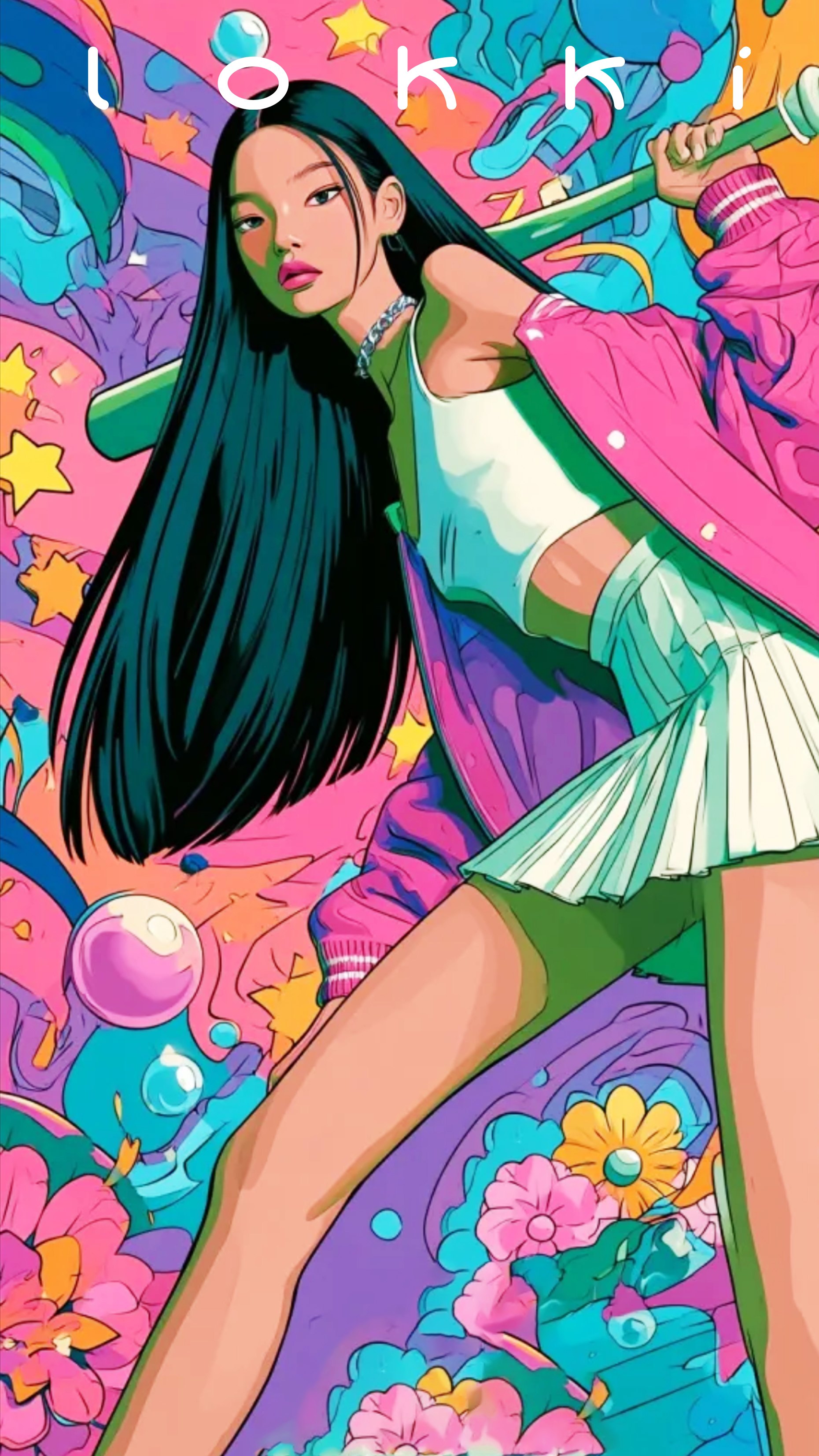
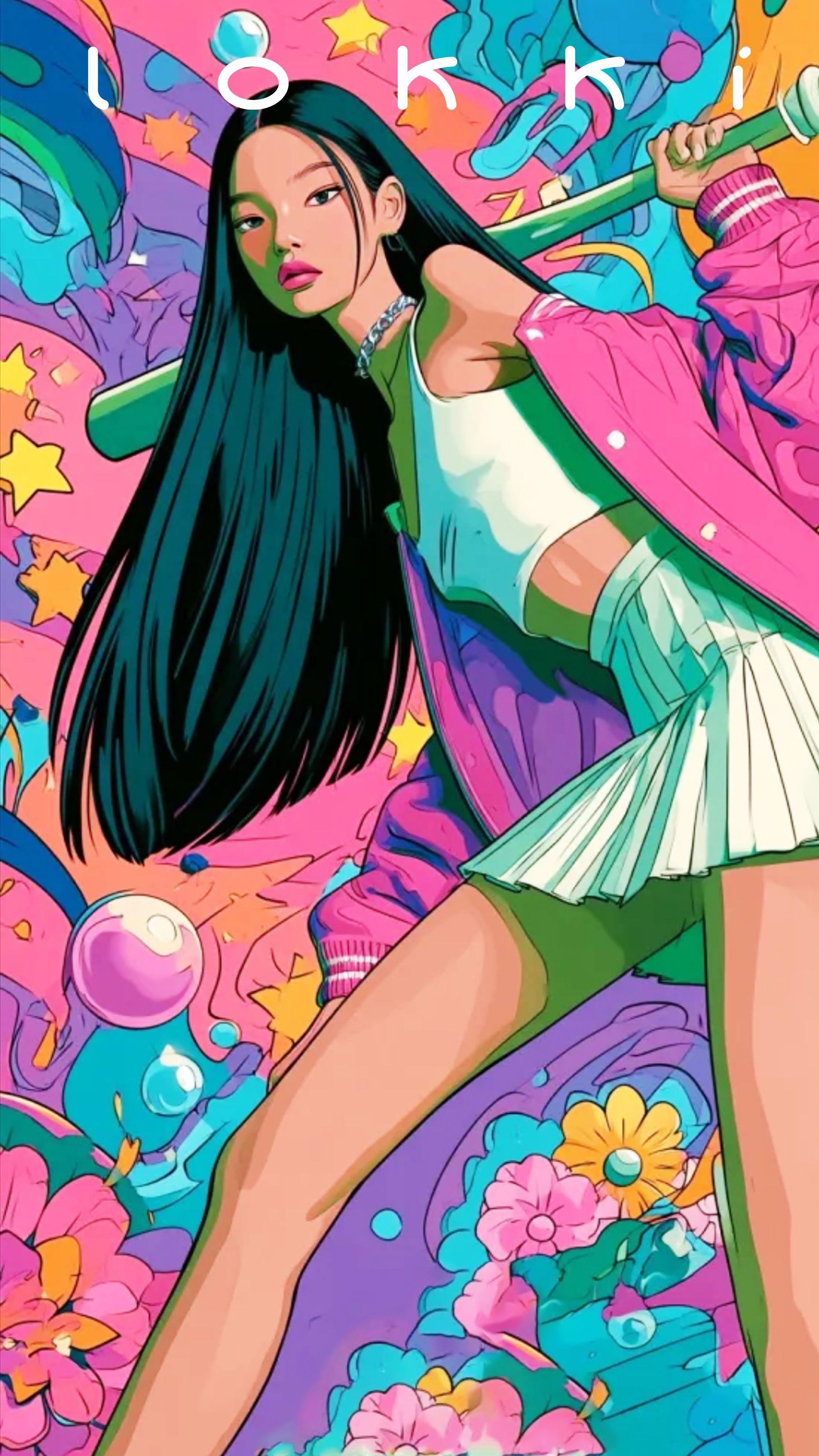
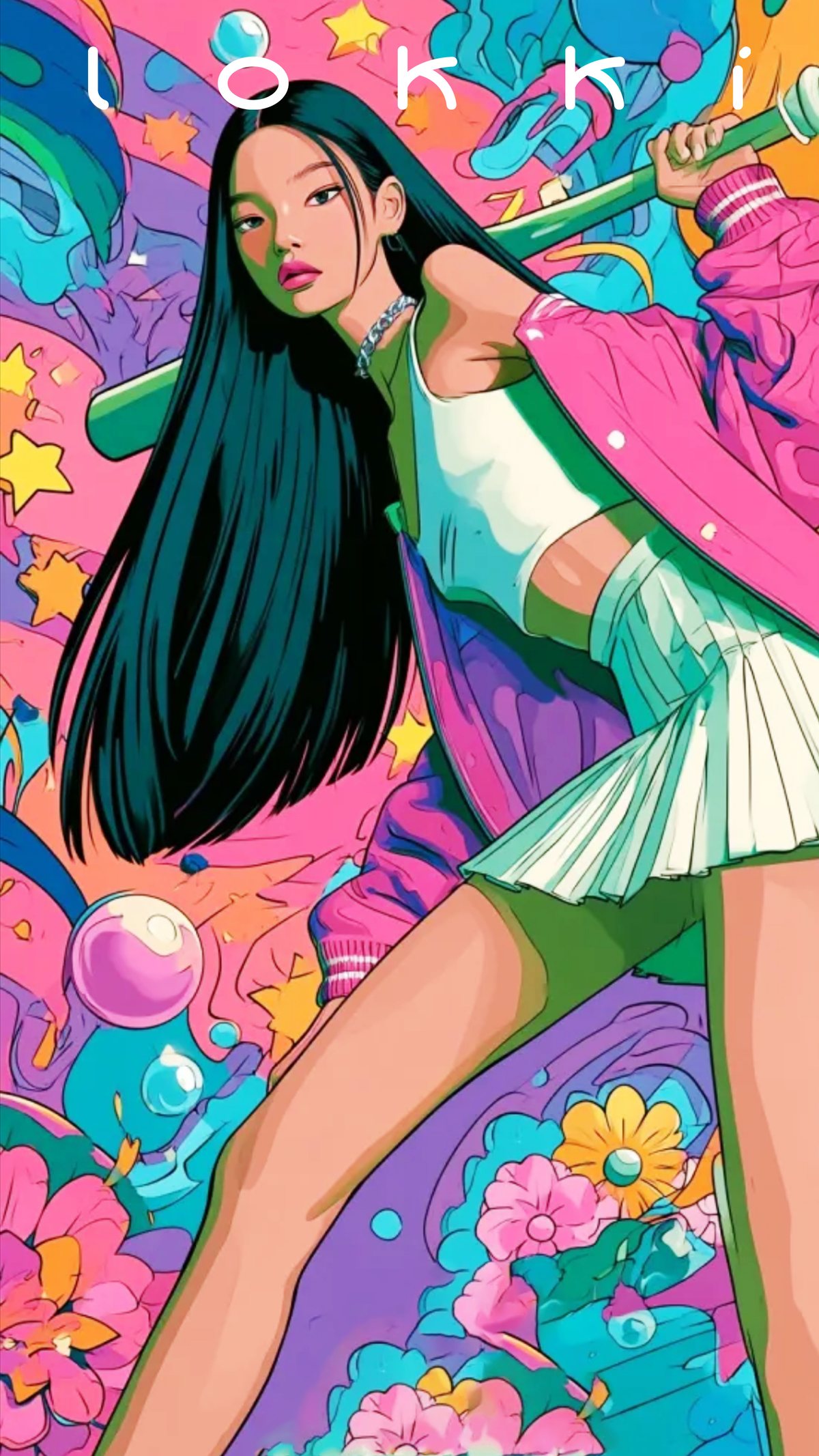
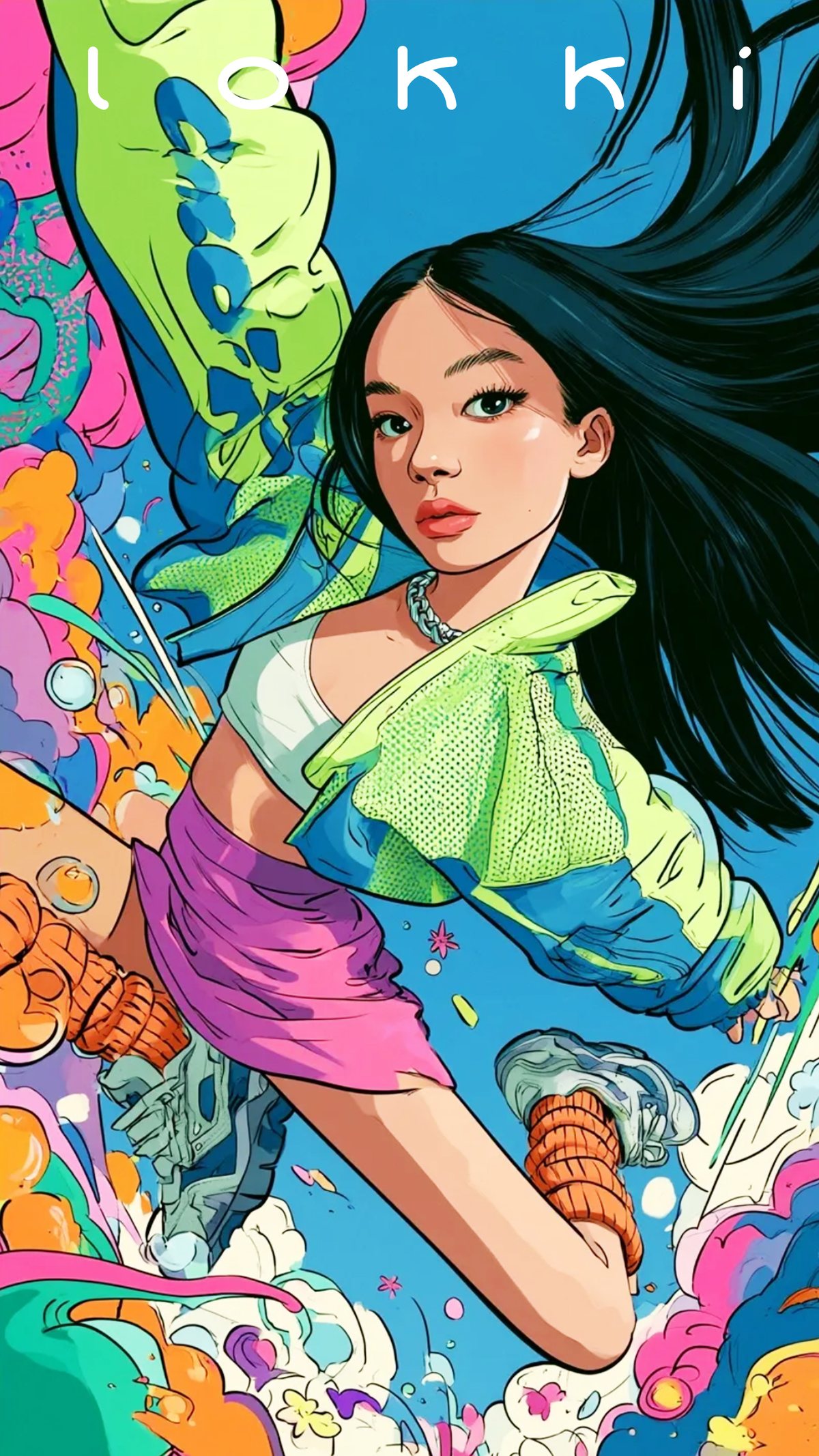
The camera is on the floor. That's the whole series. Eight illustrations, one camera position, and a foreground object — usually a shoe — pushed so close it's almost out of focus.
Everything else follows from that: the legs get long, the body leans, the face has to work harder to hold the frame. It's the oldest trick in fashion photography and it still works when the subject is drawn.
Shoot from the floor
Low angle does two things at once. It makes the figure monumental, and it makes the ground disappear — there's no horizon, so the character can be standing in a pile of bubbles or a field of flowers and both read the same way.
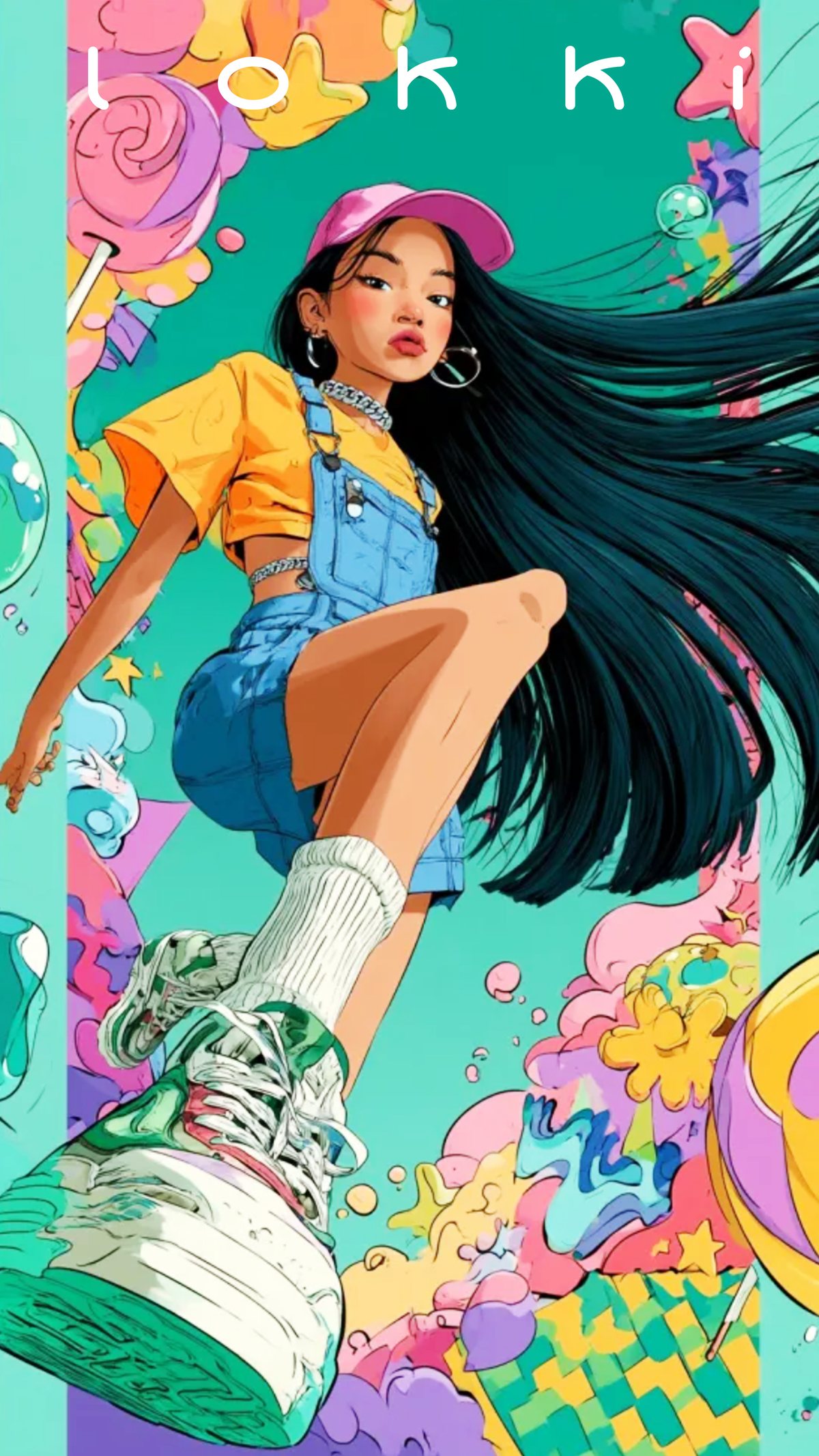
We kept the distortion visible. A little too much shoe, a little too much knee. Correcting it would have made the pictures tasteful and dead.
Hair is a shape, not a texture
In these images the hair is drawn as a solid mass — one big silhouette that swings across the frame and covers whatever it wants. It's not there to look soft. It's there to balance the colour.
That's why most of the figures have long, dark hair against a candy background. The dark shape gives the eye somewhere to rest in a picture that is otherwise screaming.
Y2K isn’t a palette. You can hit the colours and still miss the attitude entirely.
The attitude is mostly a matter of weight. Hip out, shoulder dropped, chin level. Nobody in this series is standing up straight, because standing up straight is what people do when they're waiting for a bus.
We also let the clothes be slightly too big. The oversized tee, the puffed sleeve, the baggy overall — Y2K was a decade of borrowing other people's sizes.
The accessories do the storytelling
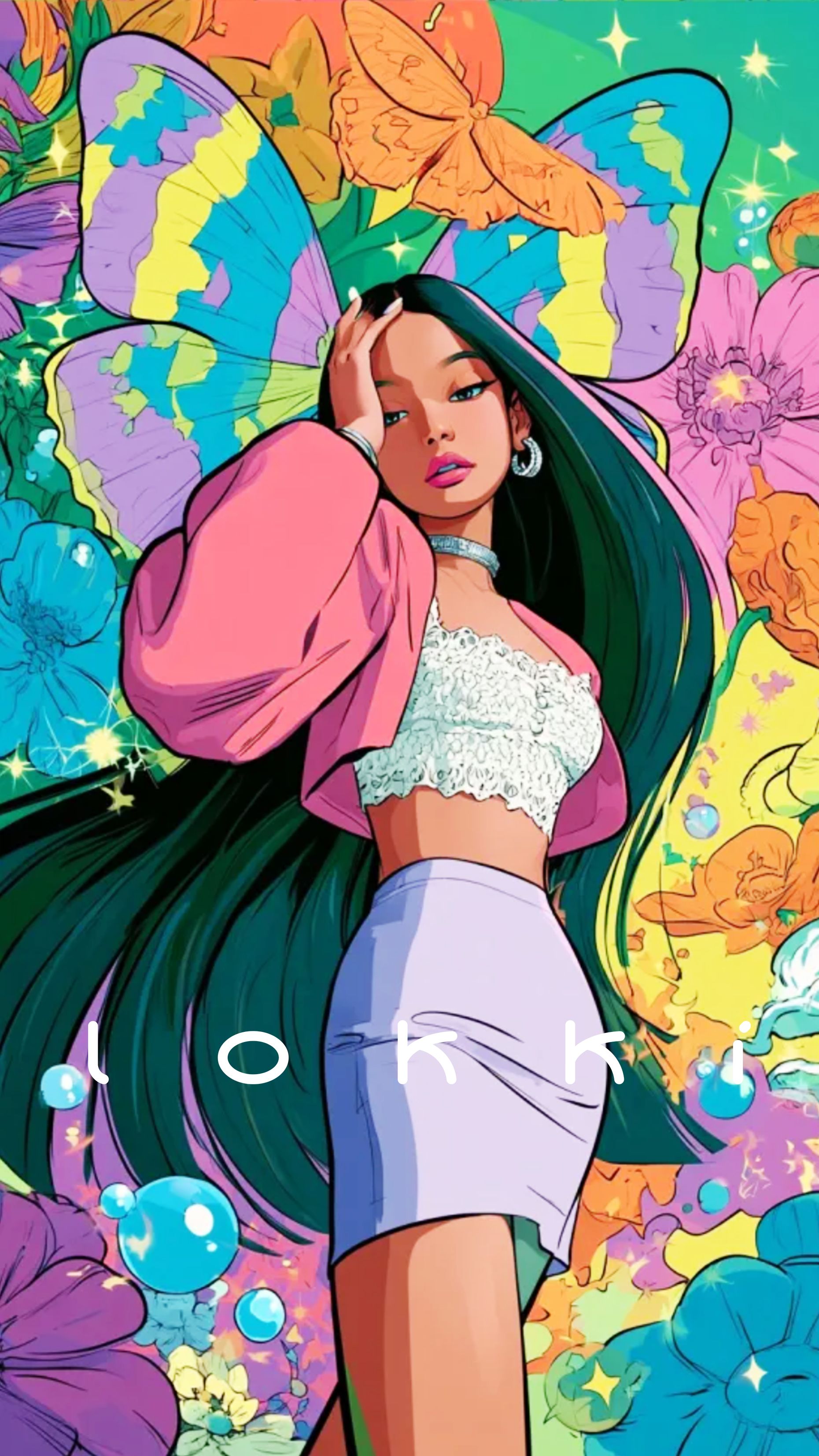
A butterfly clip, a chain necklace, holographic lenses, a plastic bag, a bat held over one shoulder. None of these objects mean anything on their own, and together they place the picture in a very specific three-year window.
That's the useful thing about Y2K as a visual language: it's dense with small, cheap, extremely recognisable objects. You don't need a caption. You need a hair clip and the right shade of pink.
Print tests
Every image was checked at three sizes before it was finished: a phone thumbnail, a 40 mm sticker, and a packaging sleeve about the width of a hand. Three things had to survive all of them.
- The silhouette. If you can't read the pose at 40 mm, no amount of detail saves it.
- The palette. Two colours plus one accent still reads when the image is tiny. Five colours turn to mud.
- The face. The eyes have to be big enough to register as eyes, which is why the heads are slightly oversized.
It's a boring checklist and it's the reason the set holds up outside a browser. Pretty pictures are common. Pictures that still work on a cup are not.
Why brands keep asking for this
This style gets licensed a lot, and it's easy to see why. It's young without being childish, it photographs well at small sizes, and the palette is loud enough to survive being printed on a cheap substrate — a cup, a sticker, a packaging sleeve.
The series was built with that in mind: strong silhouettes, few elements, a clear subject. Pretty pictures are common. Pictures that still work at 40 mm wide are not.
The full set is on the Y2K Cool Girl case page. The rest of the illustration work — including the louder sets — is in AI Lab.